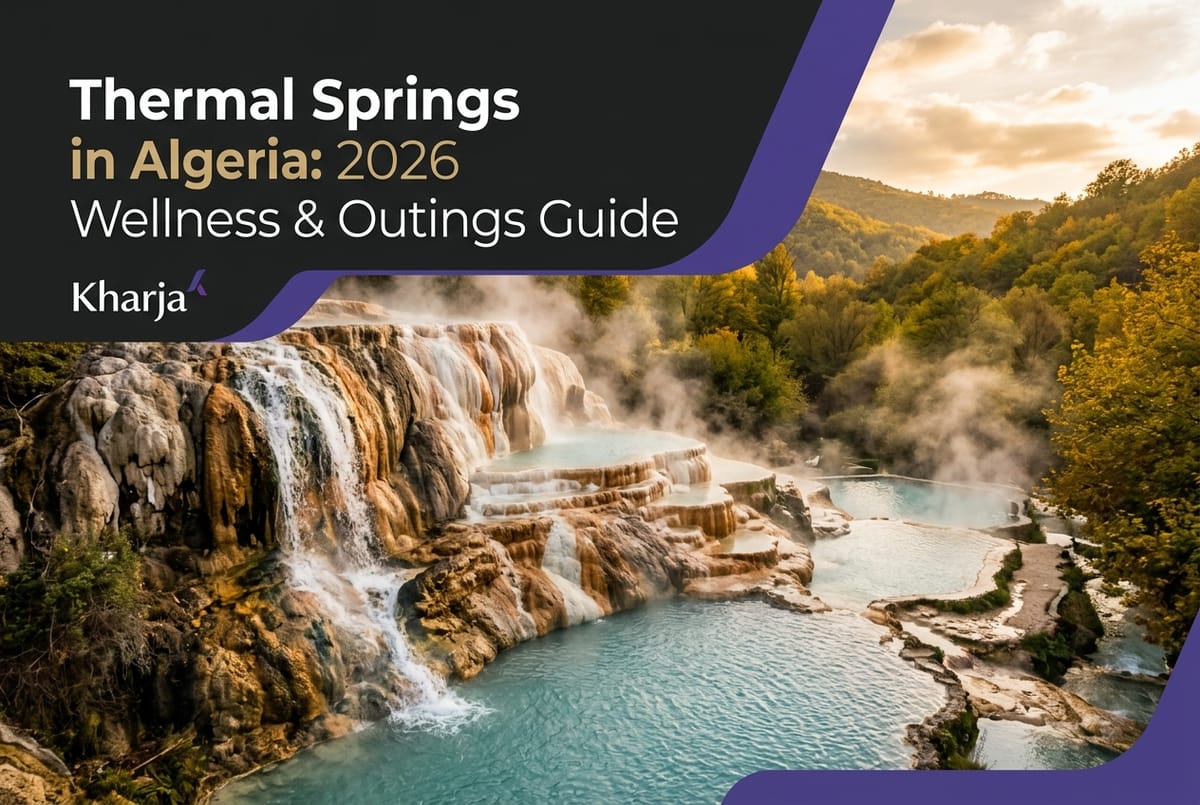
Thermal Springs in Algeria: 2026 Wellness & Outings Guide
Last updated: November 18, 2026
Thermal Springs in Algeria: 2026 Wellness & Outings Guide
As the crisp autumn breezes of November sweep across the high plateaus and mist gathers over the Atlas mountain ridges, a cherished centuries-old tradition comes alive throughout Algeria: thermal spring cures and rejuvenating family wellness getaways. Blessed with over two hundred natural thermo-mineral springs bubbling from the deep tectonic faults of the Algerian earth, the country possesses one of the richest and most captivating hydrothermal heritages in the Mediterranean basin. From the dramatic boiling travertine waterfall of Hammam Debagh in Guelma to the pine-scented mountain heights of Mount Zaccar sheltering Hammam Righa, from the palm-shaded therapeutic resorts of Bouhnifia in Mascara to the uniquely radioactive curative springs of Hammam Guergour in Sétif, every thermal station tells an inspiring story where bodily wellness, mental tranquility, and authentic hospitality converge.
In this autumn season of 2026, embarking on a journey to an Algerian thermal spa resort is the ultimate escape to restore your energy, ease joint stiffness, and spend meaningful time with loved ones. Far from urban hustle, modern Algerian thermal complexes have reinvented themselves to provide warm contemporary accommodation, state-of-the-art balneotherapy facilities, landscaped walking parks, and hearty regional cuisine. Whether you are seeking a targeted hydrotherapy cure or simply a peaceful weekend recharge surrounded by pristine nature, Algerian thermalism unites time-tested therapeutic properties with the legendary warmth of local culture.
To help you organize your journey with total confidence, Kharja brings together the finest thermal spa hotels, family resorts, and wellness itineraries across all 58 wilayas of Algeria. Utilizing our interactive map, verified traveler ratings, and curated regional guides, design your bespoke thermal retreat and unlock the revitalizing treasures of Algeria's natural hot springs.
🎯 Key Takeaways
- Algeria is home to over 200 natural thermo-mineral springs across the country, continuing an unbroken tradition of hydrotherapy dating back to ancient Numidia and the Roman Empire.
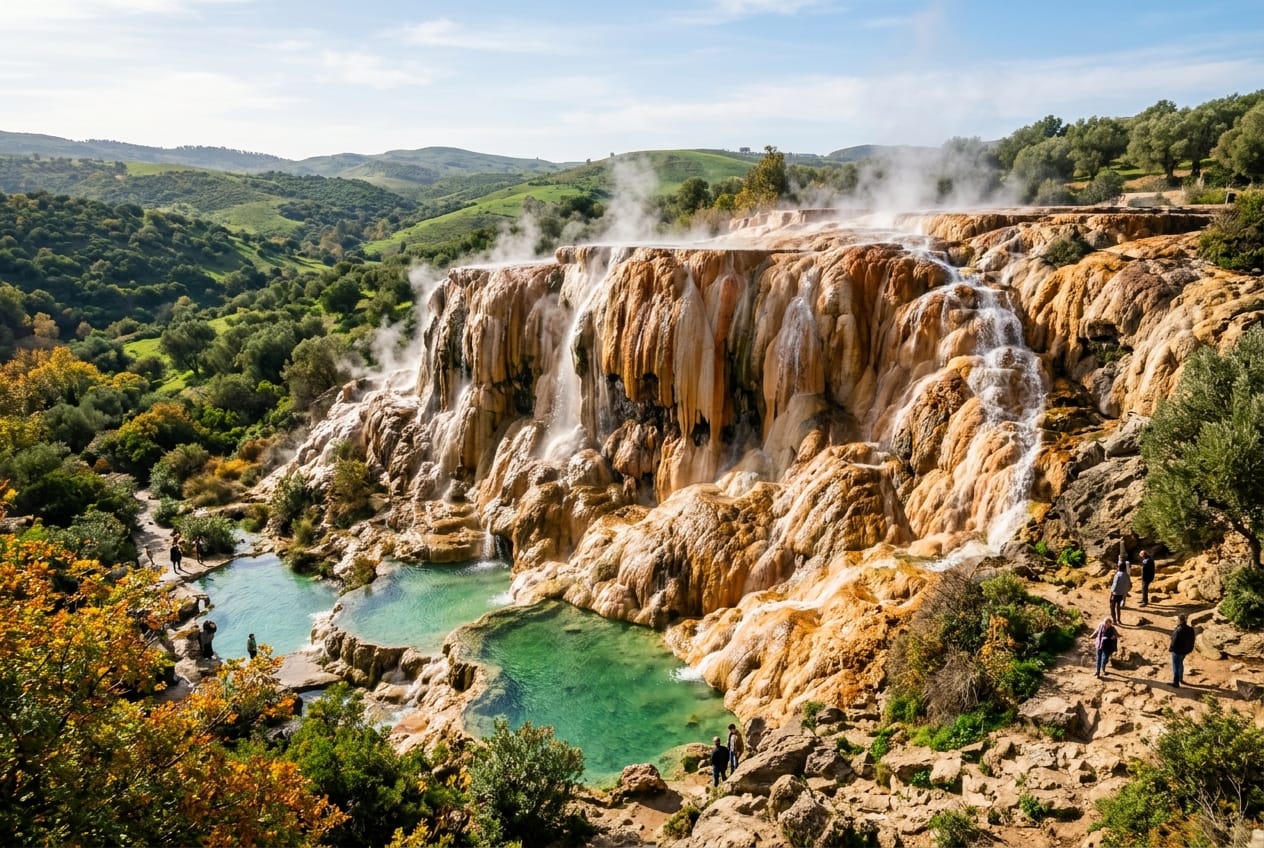
- Hammam Debagh (Guelma province) features one of the hottest natural springs on Earth (97°C / 206°F) and an awe-inspiring calcified mineral waterfall displaying golden and ochre hues.
- Hammam Bouhnifia (Mascara province) stands as the national capital of hydrotherapy, famed for its sodium-bicarbonate waters designed to soothe rheumatism and digestive disorders.
- Hammam Righa (Aïn Defla province), perched at 600 meters altitude within Mount Zaccar's fragrant pine forests, offers a crisp alpine wellness retreat just two hours from Algiers.
- Hammam Guergour (Sétif province) ranks 3rd worldwide for natural radioactive curative waters, providing renowned neurological and joint recovery treatments.
- Algerian thermal resorts cater perfectly to multi-generational family vacations combining soothing balneotherapy, nature hikes, and rich local culinary discoveries.
- The Kharja mobile app allows you to easily locate each thermal resort, browse pool operating hours, and read 100% verified visitor reviews.
📋 Table of Contents
- Thermal Springs in Algeria: A Millennial Natural Heritage
- Hammam Debagh (Guelma): The Legendary Petrified Waterfall
- Hammam Bouhnifia (Mascara): The Capital of Hydrotherapy
- Hammam Righa (Aïn Defla): Alpine Wellness in Mount Zaccar
- Hammam Guergour (Sétif): Curative Radioactive Waters of the Babors
- Health Benefits of Thermal Waters and Practical Advice for Visitors
- Planning a Family Thermal Weekend with the Kharja App
- Comparative Table of Algeria's Leading Thermal Resorts
- Frequently Asked Questions About Thermal Baths in Algeria
Thermal Springs in Algeria: A Millennial Natural Heritage {#thermal-springs-in-algeria-a-millennial-natural-heritage}
Algeria's hydrotherapy tradition stems from deep tectonic faults across the Atlas mountain ranges that heat and mineralize subterranean waters over thousands of years.
Since ancient times, both Numidian kingdoms and the Roman Empire recognized the healing qualities of Algerian thermal springs. Roman legions constructed monumental bathhouses (thermae) and sanitariums around steaming springheads, naming them Aquae Calidae (modern Hammam Righa) and Aquae Thibilitanae (Hammam Debagh). Throughout the Ottoman and contemporary eras, these healing waters have preserved their essential role in community purification, preventative healthcare, and warm hospitality.
Today, Algeria counts over seventy operational thermal stations and bathhouses managed by both national tourism enterprises and private developers. According to official data from the National Tourism Office (ONT), thermal tourism is undergoing an unprecedented modernization program, introducing upscale spa facilities and seamlessly connecting with regional ecotourism routes. As highlighted in our dedicated guide to ecotourism and national parks in Algeria, combining mineral spring therapy with environmental preservation offers one of the most sustainable travel experiences in North Africa.
Hammam Debagh (Guelma): The Legendary Petrified Waterfall {#hammam-debagh-guelma-the-legendary-petrified-waterfall}
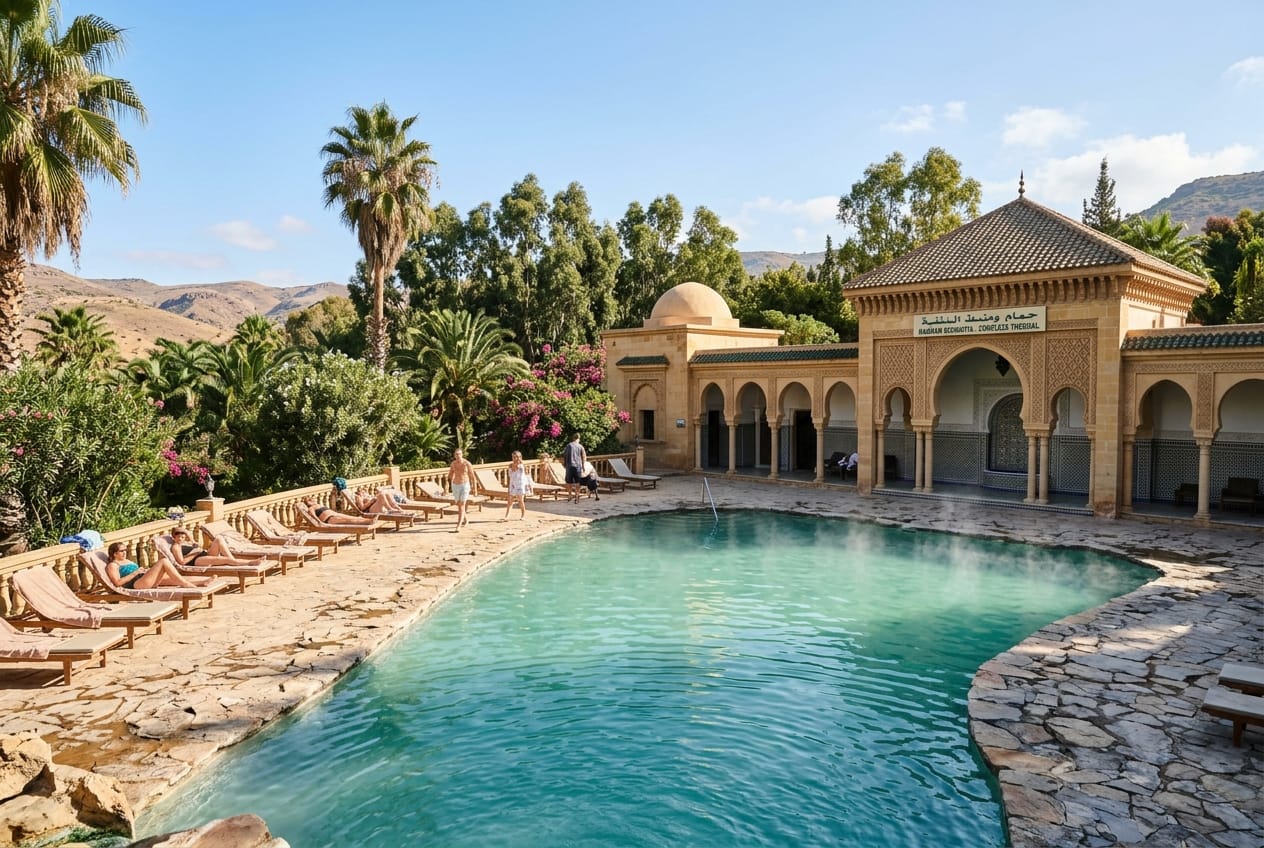
Hammam Debagh, formerly known as Hammam Meskoutine, is world-famous for its massive calcified travertine waterfall and boiling spring waters emerging at 97°C (206°F), making it the second hottest natural spring in the world.
Located just 15 kilometers west of Guelma city, this natural wonder is a spectacular geological marvel. Boiling mineral water loaded with calcium carbonate surges from underground springs with tremendous force. As it contacts open air, the carbonate precipitates rapidly, creating towering golden-amber mineral curtains, petrified cones, and terraced basins resembling Turkey's famed Pamukkale. The thick steam rising gracefully over the travertine formations creates an enchanting atmosphere at dawn and dusk.
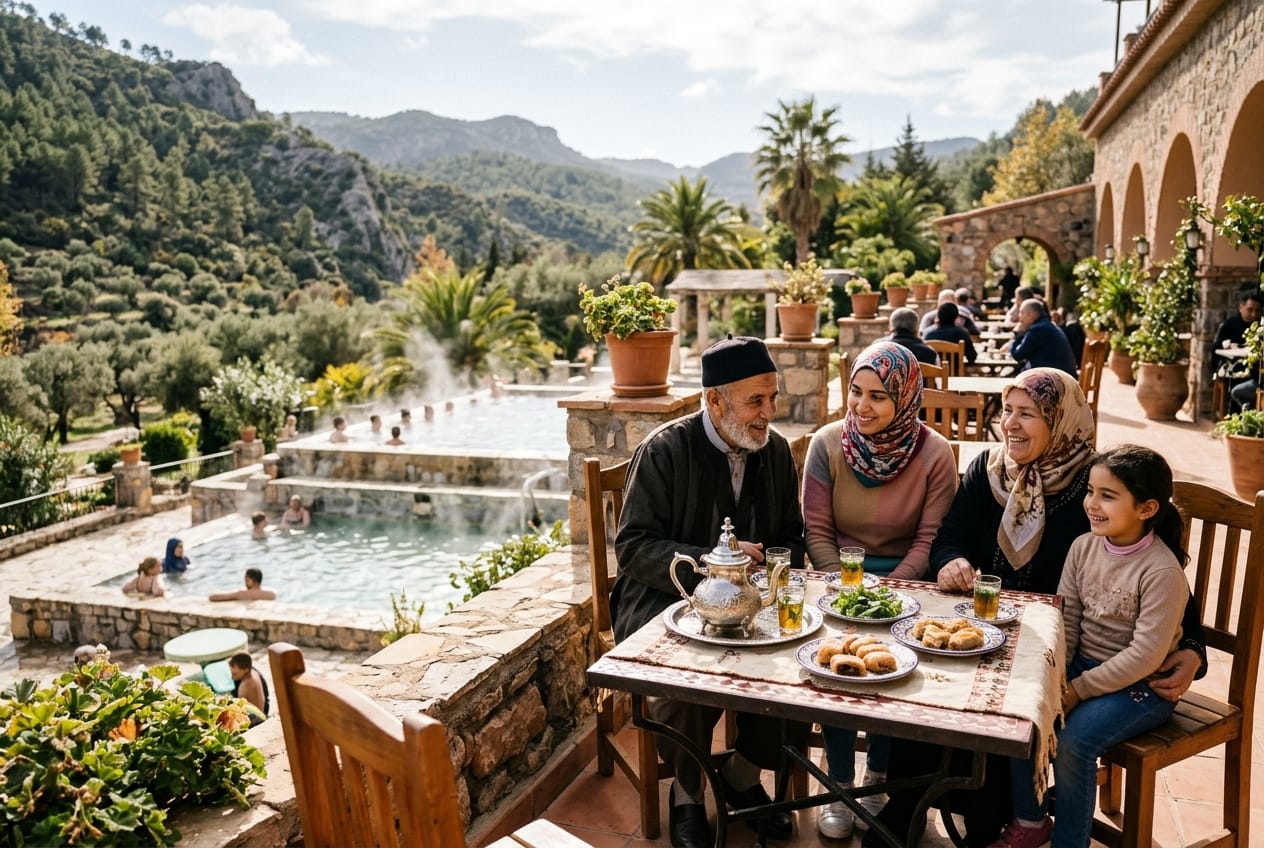
Medically, the sulfurous, chlorinated, and sodium-rich waters of Hammam Debagh are widely prescribed for chronic rheumatisms, respiratory ailments, sciatic nerve pain, and specific skin conditions. The resort features comfortable hotels equipped with private mineral immersion tubs, high-pressure hydromassage showers, saunas, and segregated men's and women's thermal pools. Outside, shaded stone terraces under olive and eucalyptus trees allow families to relax with traditional Algerian mint tea while gazing upon the steaming falls. For a full Eastern Algerian journey, you can easily pair your cure with an excursion to the desert canyons featured in our guide on Biskra and the Balcons of Ghoufi.
Hammam Bouhnifia (Mascara): The Capital of Hydrotherapy {#hammam-bouhnifia-mascara-the-capital-of-hydrotherapy}
Hammam Bouhnifia is Algeria's foremost thermal resort town in terms of treatment facilities and visitor capacity, nestled within a verdant river valley in Mascara province.
Revered as the "Queen of Algerian Spa Towns," Bouhnifia enjoys a longstanding reputation that extends across North Africa. Crossed by the tranquil waters of the Oued El Hammam, the spa town is framed by lush public gardens of towering date palms and eucalyptus trees, providing an inviting resort atmosphere. Bouhnifia boasts several major establishments, including the grand complex operated by the National Tourism Enterprise (EGT) alongside modern private spa residences with comprehensive wellness circuits.
The thermal springs of Bouhnifia emerge at temperatures between 55°C and 70°C. Chemically abundant in bicarbonate, sodium, and chlorides, these waters excel at alleviating degenerative osteoarthritis, trauma recovery, gastrointestinal disorders, and muscular inflammation. Visitors benefit from structured therapies combining whirlpool baths, therapeutic mud applications, physiotherapy massages, and inhalation treatments. Beyond therapies, the town features vibrant local markets showcasing cold-pressed Mascara olive oils, mountain honey, and relaxing tree-lined riverside promenades.
Hammam Righa (Aïn Defla): Alpine Wellness in Mount Zaccar {#hammam-righa-ain-defla-alpine-wellness-in-mount-zaccar}
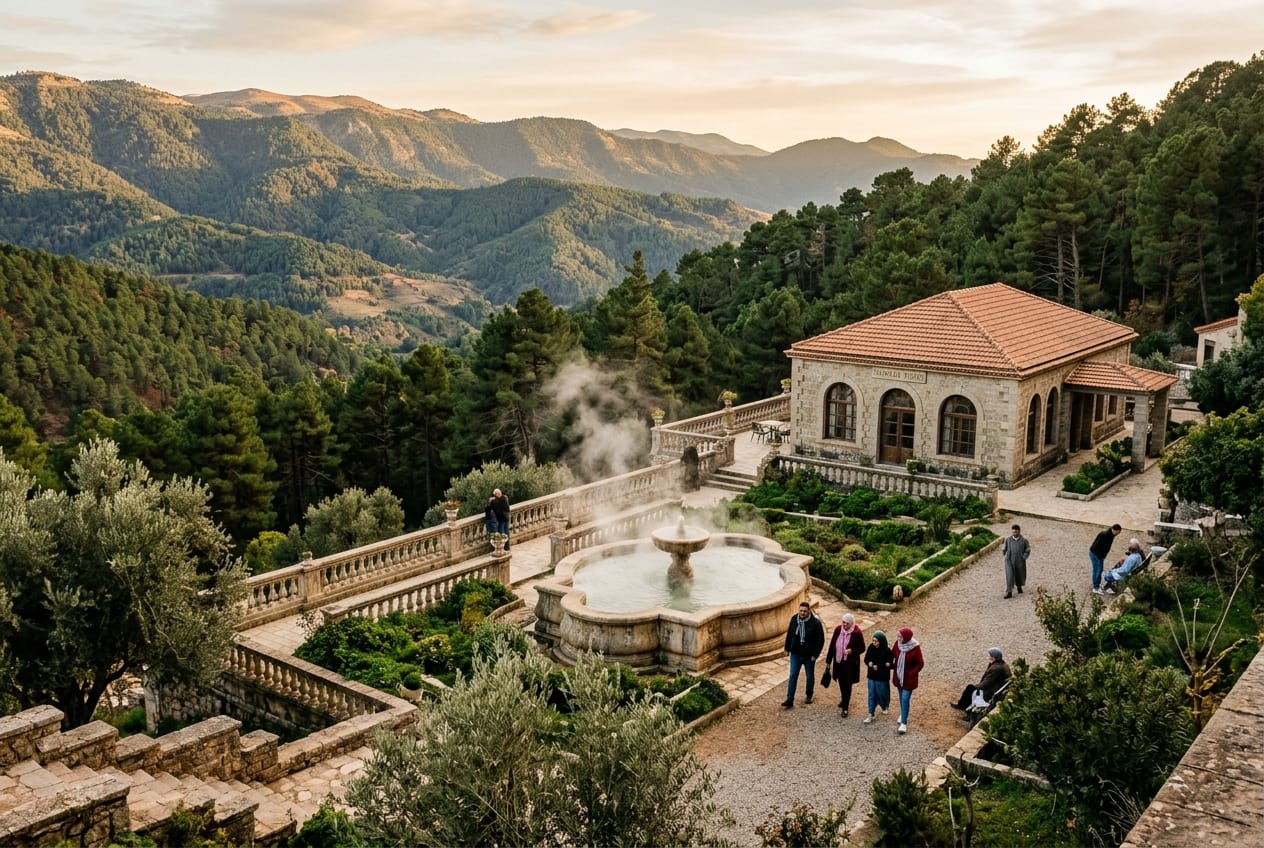
Hammam Righa is an elevated alpine thermal resort perched at 600 meters altitude on the pine-covered slopes of Mount Zaccar, combining hot mineral springs with crisp mountain air.
Built upon the ancient Roman settlement of Aquae Calidae, this renowned retreat in Aïn Defla province boasts an enviable geographic location: situated merely 100 kilometers southwest of Algiers via the East-West Highway, it is the favored weekend getaway for urbanites from Algiers, Blida, and Tipasa. The thermal domain extends through a fragrant pine forest spanning several hectares, filling the mountain air with natural therapeutic resins beneficial to the respiratory tract.
The waters of Hammam Righa gush forth at a steady 68°C. Classified as sulfated, calcium-rich, and chlorinated waters, they demonstrate exceptional efficacy in treating degenerative joint disease, chronic lower back pain, tendinitis, and nervous exhaustion. The thermal resort provides clinical balneotherapy cures as well as leisure weekend packages with soothing soaking pools, traditional black soap exfoliating scrubs, and hydromassage. After your hot soak, the surrounding trails invite you to explore crisp forest paths reminiscent of the scenic journeys detailed in our guide on the best hikes to do in Algeria.
Hammam Guergour (Sétif): Curative Radioactive Waters of the Babors {#hammam-guergour-setif-curative-radioactive-waters-of-the-babors}
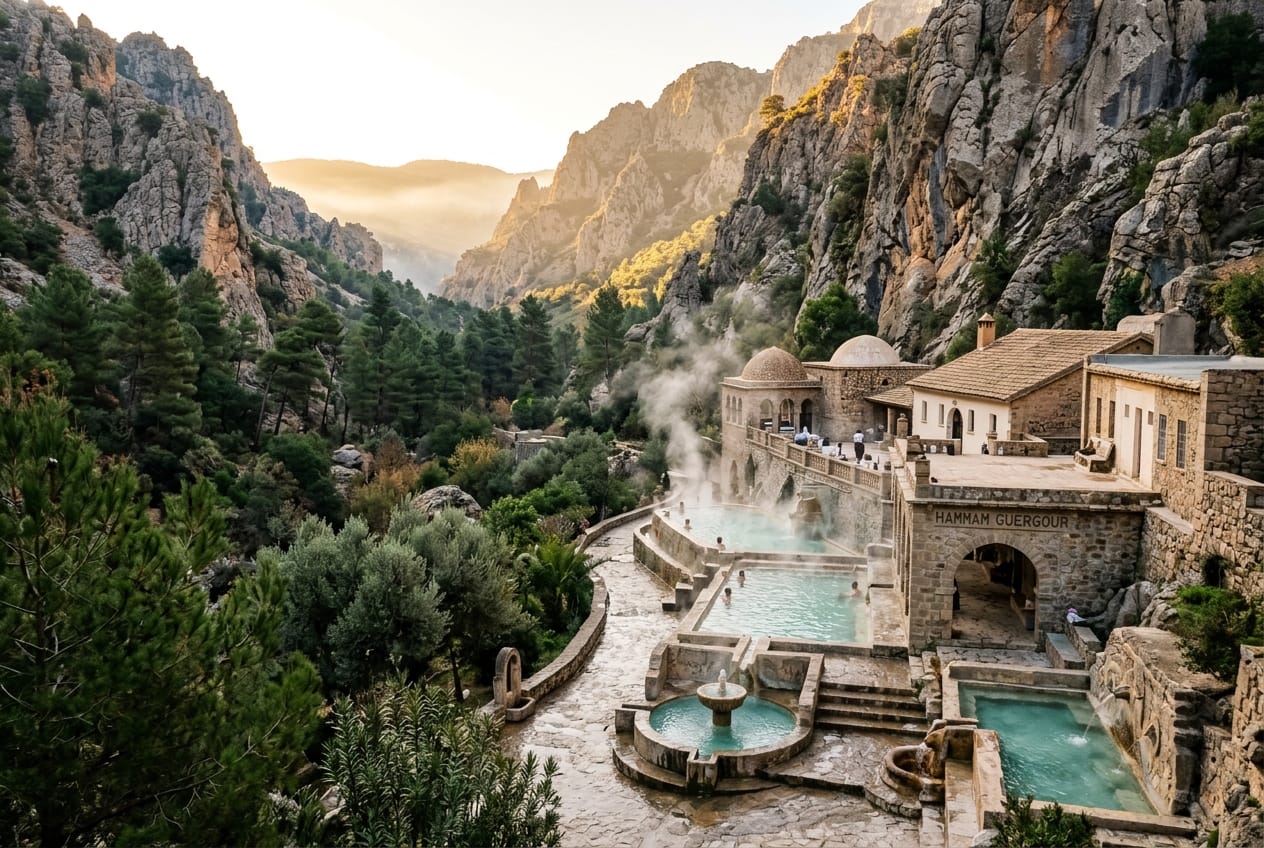
Hammam Guergour, sheltered within the rugged gorges of Oued Boussellam in northern Sétif province, possesses thermal mineral waters celebrated internationally for their rare natural radioactivity.
Though less widely publicized than western coastal resorts, Hammam Guergour represents an exceptional hydrogeological treasure. Ranked 3rd worldwide by international hydrologists for natural radon and radioactive healing properties (just behind Bad Gastein in Austria and Karlovy Vary in the Czech Republic), these mineral waters offer remarkable therapeutic benefits. The sulfurous radioactive spring emerges naturally at 44°C (111°F)-a physiological golden temperature that requires no cooling before immersion.
The curative virtues of Hammam Guergour focus predominantly on peripheral neuropathies, chronic sciatica, joint stiffness, and arterial circulation improvement. The modern clinical center at EGT Guergour maintains continuous medical supervision, tailoring bathing durations to each guest's health profile. Framed by steep limestone cliffs and cedar-clad slopes, the resort guarantees an atmosphere of profound serenity and natural recovery.
Health Benefits of Thermal Waters and Practical Advice for Visitors {#health-benefits-of-thermal-waters-and-practical-advice-for-visitors}
To maximize the therapeutic impact of your thermal retreat, it is vital to respect key medical guidelines and tailor your immersion times to your personal health condition.
Immersion in hot mineral-rich thermal water influences the human body through three primary mechanisms: thermal, mechanical, and biochemical. Heat (between 36°C and 42°C in therapeutic pools) dilates peripheral blood vessels, lowers systemic blood pressure, and promotes deep muscular relaxation. Archimedes' buoyant force counteracts 90% of body weight, enabling pain-free joint mobilization and gentle rehabilitative movement. Finally, absorbed trace minerals (sulfur, calcium, magnesium, bicarbonate) penetrate the epidermal layer to provide long-lasting anti-inflammatory and cellular repair benefits.
Follow these essential physician-recommended guidelines for a safe and rewarding thermal cure:
- Gradual immersion times: Never exceed 15 to 20 minutes during your first hot spring session. Gradually extend duration up to 30 minutes in subsequent sessions as your body adapts.
- Mandatory post-soak rest: After leaving the hot mineral pool, wrap yourself in a warm cotton bathrobe and lie down for at least 20 minutes in a resting lounge to prevent dizziness or postural hypotension.
- Continuous hydration: Copious sweating in hot mineral pools rapidly depletes body fluids. Drink at least 1.5 to 2 liters of plain mineral water throughout the day.
- Medical contraindications: Very hot thermal bathing is strictly prohibited during acute cardiovascular illness, unstable hypertension, recent deep vein thrombosis, active malignancies, or infected skin lesions. Consult your physician prior to booking if you have any pre-existing medical conditions.
Planning a Family Thermal Weekend with the Kharja App {#planning-a-family-thermal-weekend-with-the-kharja-app}
The Kharja mobile app simplifies organizing your wellness getaways by centralizing geolocated maps, verified user ratings, and family accommodation across Algeria's 58 wilayas.
Coordinating an outing that satisfies older relatives seeking joint pain relief, parents craving relaxation, and energetic children wanting fun swimming can be challenging without reliable local data. Kharja delivers a streamlined digital experience tailored for Algerian families:
- Interactive geolocated map: Easily filter thermal resorts by travel distance, water temperature, or specialized features (private family chalets, clinical hydrotherapy, on-site hotels).
- 100% verified traveler reviews: Read honest and recent community feedback on facility cleanliness, staff hospitality, water quality, and on-site dining options.
- Nearby regional attractions: Discover natural landmarks, family parks, and authentic artisanal souks located just minutes from the spa, just like those presented in our autumn guide to family outings in Algeria.
Download the free Kharja app on your mobile device today and make every weekend an unforgettable wellness retreat.
{{APP_BADGES}}
Comparative Table of Algeria's Leading Thermal Resorts {#comparative-table-of-algerias-leading-thermal-resorts}
To assist you in choosing the perfect thermal wellness destination suited to your therapeutic needs and travel preferences, consult our comprehensive comparison below.
| Thermal Station | Wilaya (Province) | Springhead Temperature | Dominant Mineral Composition | Primary Health Indications | Setting & Atmosphere |
|---|---|---|---|---|---|
| Hammam Debagh | Guelma | 97°C (Iconic cascades) | Sulfurous, sodium, chlorinated | Rheumatism, osteoarthritis, respiratory | Spectacular natural wonder, boiling travertine |
| Hammam Bouhnifia | Mascara | 55°C - 70°C | Bicarbonated, sodium, chlorinated | Joint pain, digestive conditions, recovery | Green garden city, palm-lined avenues, large spas |
| Hammam Righa | Aïn Defla | 68°C | Sulfated, calcium-rich, chlorinated | Chronic arthritis, sciatica, mental fatigue | Crisp mountain climate, vast Mount Zaccar pine forest |
| Hammam Guergour | Sétif | 44°C | Natural radioactive, sulfurous | Neurological disorders, sciatica, circulation | Rugged Babor mountain gorge, quiet & secluded |
Frequently Asked Questions About Thermal Baths in Algeria {#frequently-asked-questions-about-thermal-baths-in-algeria}
What is the best time of year to visit thermal springs in Algeria?
The optimal season runs from October through April. Autumn and winter provide crisp outdoor air that makes soaking in steaming mineral waters deeply rewarding and invigorating, avoiding the dry heat of inland summers.
Is a medical prescription required to access Algerian thermal baths?
For recreational visits, private hot tubs, and general pool sessions, no doctor's prescription is required. However, for specialized clinical treatments (subaquatic jet massages, medical mud wraps, guided pool physiotherapy), an initial intake checkup with the resort's on-site medical team is mandatory.
Are Algerian thermal spa resorts child-friendly?
Yes, most major thermal centers provide family-oriented infrastructure, including private bungalows with kitchenettes, outdoor garden playgrounds, and designated family pool schedules. However, direct prolonged soaking in high-temperature sulfurous pools is not recommended for children under 6 years old.
What personal items should visitors bring to a thermal station?
Pack two swimsuits made from chlorine- and mineral-resistant fabric, a swim cap (commonly required in shared thermal pools), non-slip rubber pool slides, a thick cotton bathrobe for post-soak lounging, and your everyday personal care essentials.
How much does an average thermal spa stay cost in Algeria?
Prices cater to a range of travel styles. A single private mineral bath session generally costs between 400 and 800 DZD. For full-board accommodation at a modern thermal hotel including standard bathhouse access, expect between 6,000 and 14,000 DZD per person per night depending on season and room category.
About Kharja
Kharja (خرجة) is the 100% Algerian digital platform dedicated to discovering, planning, and organizing your outings and events across all 58 wilayas of Algeria. Whether you are looking for a thermal spa retreat, an invigorating mountain hike with family, or top local cultural gatherings, Kharja connects you with Algeria's hidden treasures in a single click. Join our vibrant community on Instagram, Facebook, TikTok, and X.