Cultural Heritage & Historical Sites in Algeria: The 2026 Guide

Last updated: September 16, 2026
Cultural Heritage & Historical Sites in Algeria: The 2026 Guide
Algeria boasts one of the richest and most diverse cultural and archaeological heritages in the Mediterranean basin. From the whitewashed labyrinth of the Casbah of Algiers to the monumental Roman cities of Tipaza and Timgad, and from the Ottoman palaces of Constantine to the masterworks housed in our national museums, our country offers an awe-inspiring journey through thousands of years of civilization.
As September ushers in the back-to-school and post-summer season, cooler autumn breezes create the perfect conditions to explore these historical wonders. Whether you are venturing out with family, gathering friends, or traveling independently, exploring Algeria's treasures has never been more seamless thanks to Kharja—the premier Algerian platform for discovering heritage locations, booking local guided tours, and checking museum schedules across all 58 wilayas.
In this comprehensive 2026 guide, explore must-visit UNESCO World Heritage sites, premier museums across key Algerian cities, pricing in Algerian Dinars (DZD), and practical recommendations for memorable cultural excursions.
🎯 Key Takeaways
- Algeria features seven inscribed UNESCO World Heritage cultural properties, showcasing extraordinary Numidian, Roman, Byzantine, Arab-Islamic, and Ottoman history.
- September and the autumn season provide mild, comfortable temperatures ideal for touring extensive open-air archaeological parks without the intense heat of peak summer.
- Admission fees at national museums and archaeological ruins remain highly accessible, ranging generally between 100 and 300 DZD per adult, with student discounts and free entry for young children.
- Hiring a licensed local guide or connecting with an experienced cultural organization turns an outing into an engaging, educational experience.
- The Kharja mobile app enables you to pinpoint cultural happenings, guided weekend group walks, and special art exhibitions in real time across all 58 wilayas.
📋 Table of Contents
UNESCO World Heritage Gems in Algeria {#unesco-world-heritage-gems-algeria}
Algeria possesses architectural and archaeological landmarks of outstanding universal value, documented and recognized on the official list of UNESCO.
From the Mediterranean coastline to the inland highlands, here are three essential stops for a journey through time.
1. The Casbah of Algiers: Historic Heart and Living Legend
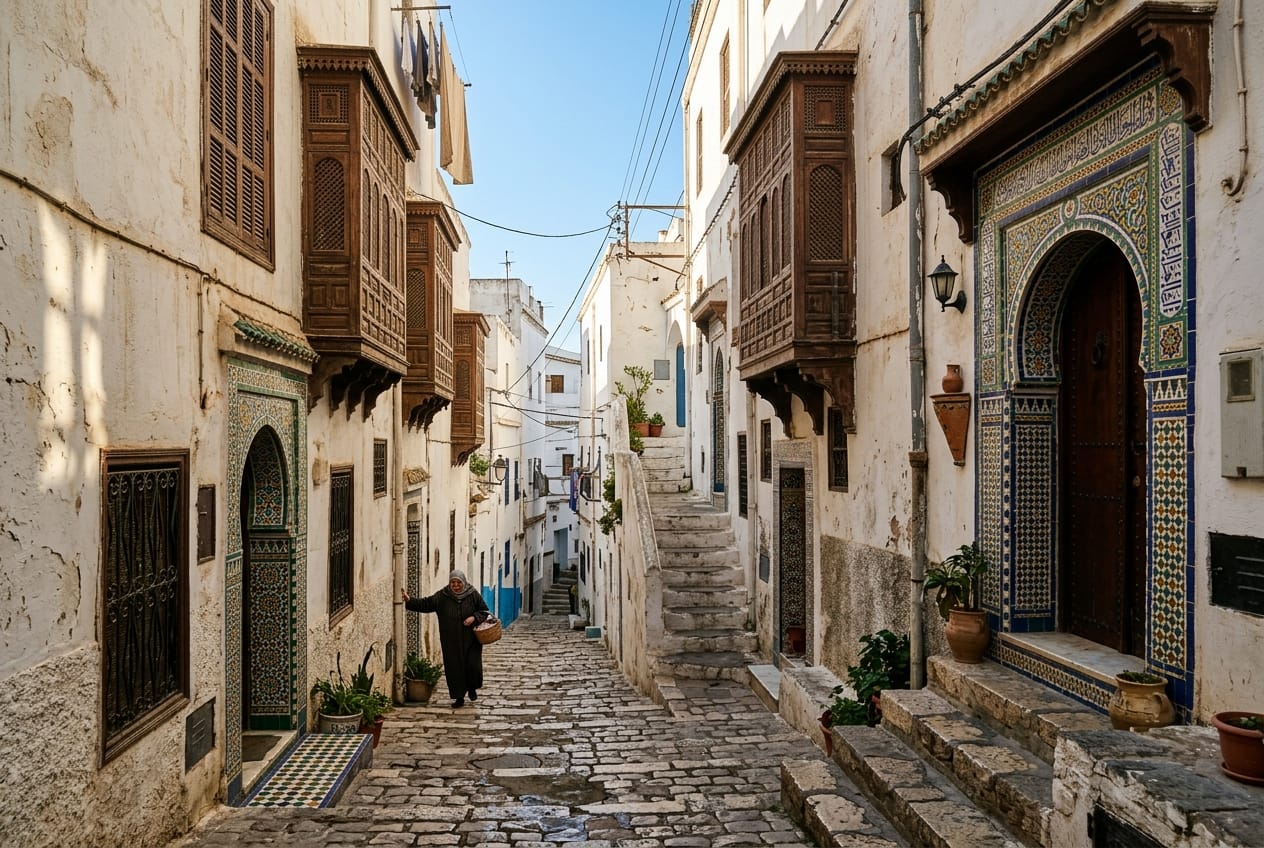
Overlooking the sparkling Bay of Algiers, the Casbah is a supreme example of a historic Islamic medina and fortified Ottoman city. Built on a steep hill descending toward the sea, it holds remarkable architectural treasures:
- Bastion 23 (Palais des Raïs): A beautifully restored maritime palace complex showcasing craft exhibitions and maritime heritage.
- Palais Mustapha Pacha & Dar Aziza: Refined aristocratic residences characterized by intricate zellige tilework, carved stucco, and luminous courtyards.
- Historic Craftsmen Workshops: Walk the cobbled alleys to meet master coppersmiths, woodcarvers, and miniaturists preserving centuries of artistry.
2. Tipaza Archaeological Park: Classical Antiquity by the Sea
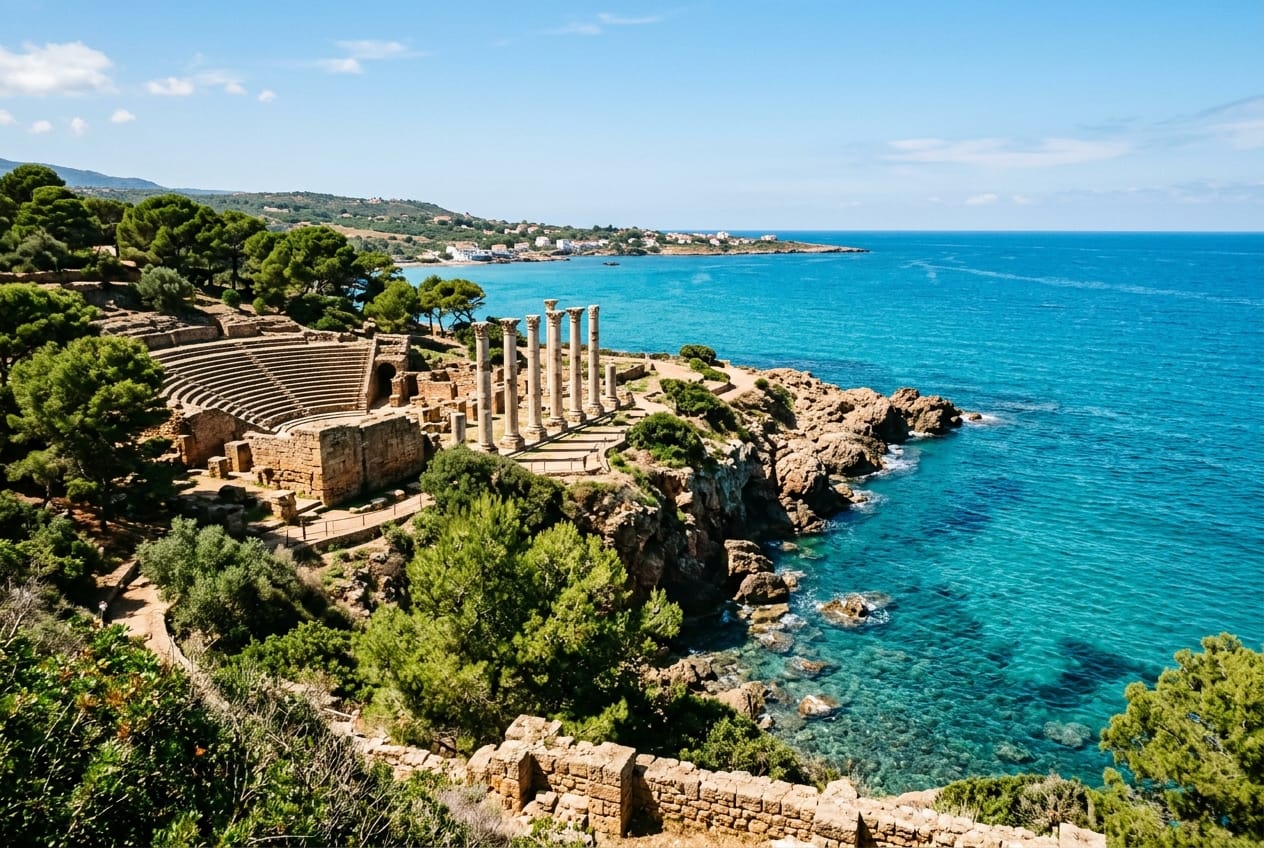
Located merely 70 kilometers west of Algiers, Tipaza is celebrated for its stunning harmony of Phoenician, Roman, and early Christian ruins framed by Mediterranean pine trees:
- The Amphitheater & Forum: Walk among weathered golden stone columns with direct views over turquoise waters.
- The Basilica of Saint Salsa: Perched atop a coastal cliff, offering dramatic vistas of Mount Chenoua.
- The Royal Mausoleum of Mauretania (Kbour er-Roumia): Located nearby on the hills of Sidi Rached, this circular stone funerary pyramid stands vigil over the fertile Mitidja plain. Following your morning exploration, unwind with our curated culinary picks in the best restaurants and traditional cafés in Algeria.
3. Timgad and Djemila: North Africa's Roman Masterpieces
Across Algeria's eastern highlands, two remarkably preserved ancient Roman cities rival the finest historical ruins of Rome and Pompeii:
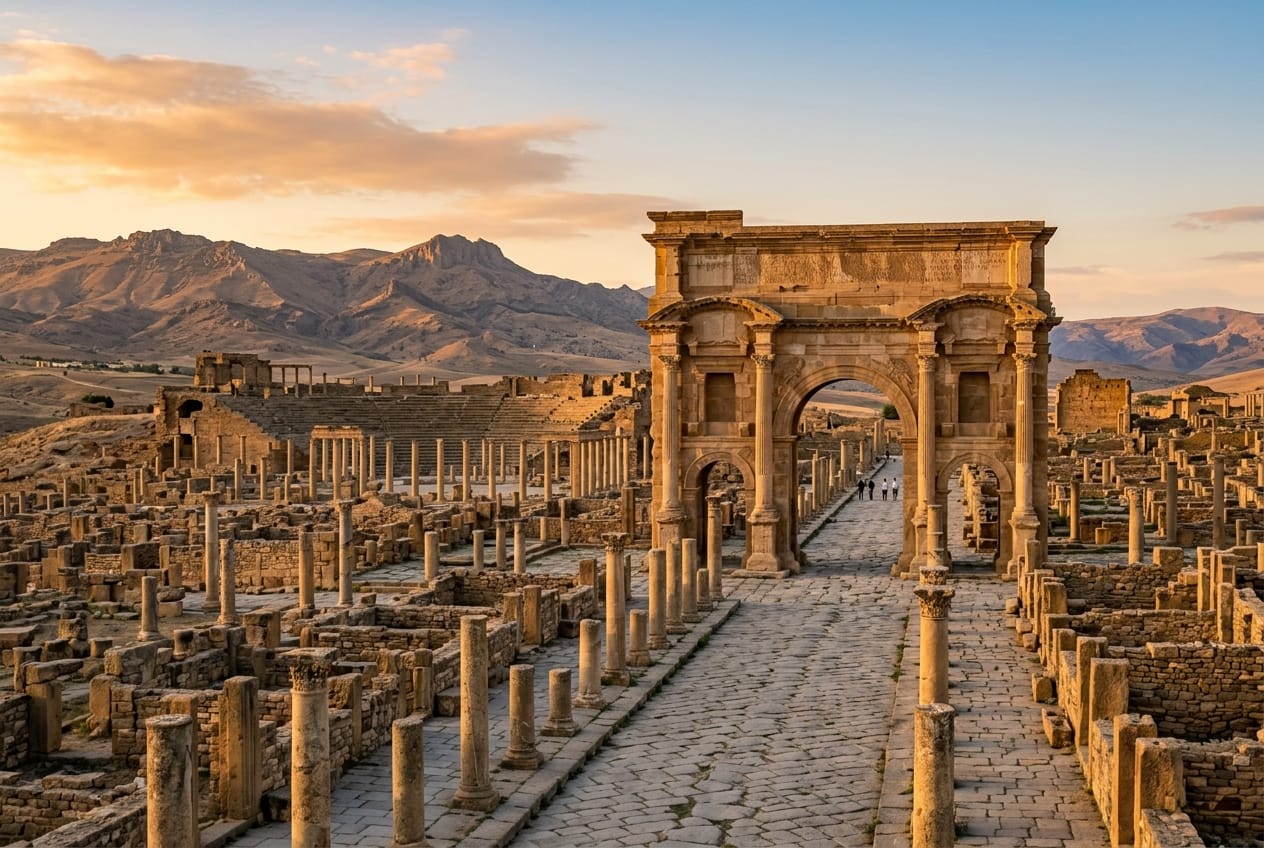
- Timgad (Thamugadi - Batna Province): Founded under Emperor Trajan in 100 AD, Timgad exemplifies orthogonal Roman urban planning, featuring the triumphal Trajan's Arch, a 3,500-seat theater, and an ancient public library.
- Djemila (Cuicul - Sétif Province): Nestled in dramatic mountain terrain at 900 meters elevation, Djemila is famous for its grand civic forum and an on-site archaeological museum showcasing world-class mosaic pavements. For outdoor enthusiasts, these cultural visits complement our guide to the best hikes in Algeria.
Essential Museums in Algiers, Oran, and Constantine {#essential-museums-algiers-oran-constantine}
Algeria's national museums safeguard priceless collections spanning prehistoric Saharan rock art to contemporary modern masterpieces.
Visiting these cultural institutions offers deep insight into Algeria's artistic genius and continuous history.
1. In Algiers: The Museum of Fine Arts and the Bardo National Museum
The capital city hosts premier museum facilities:
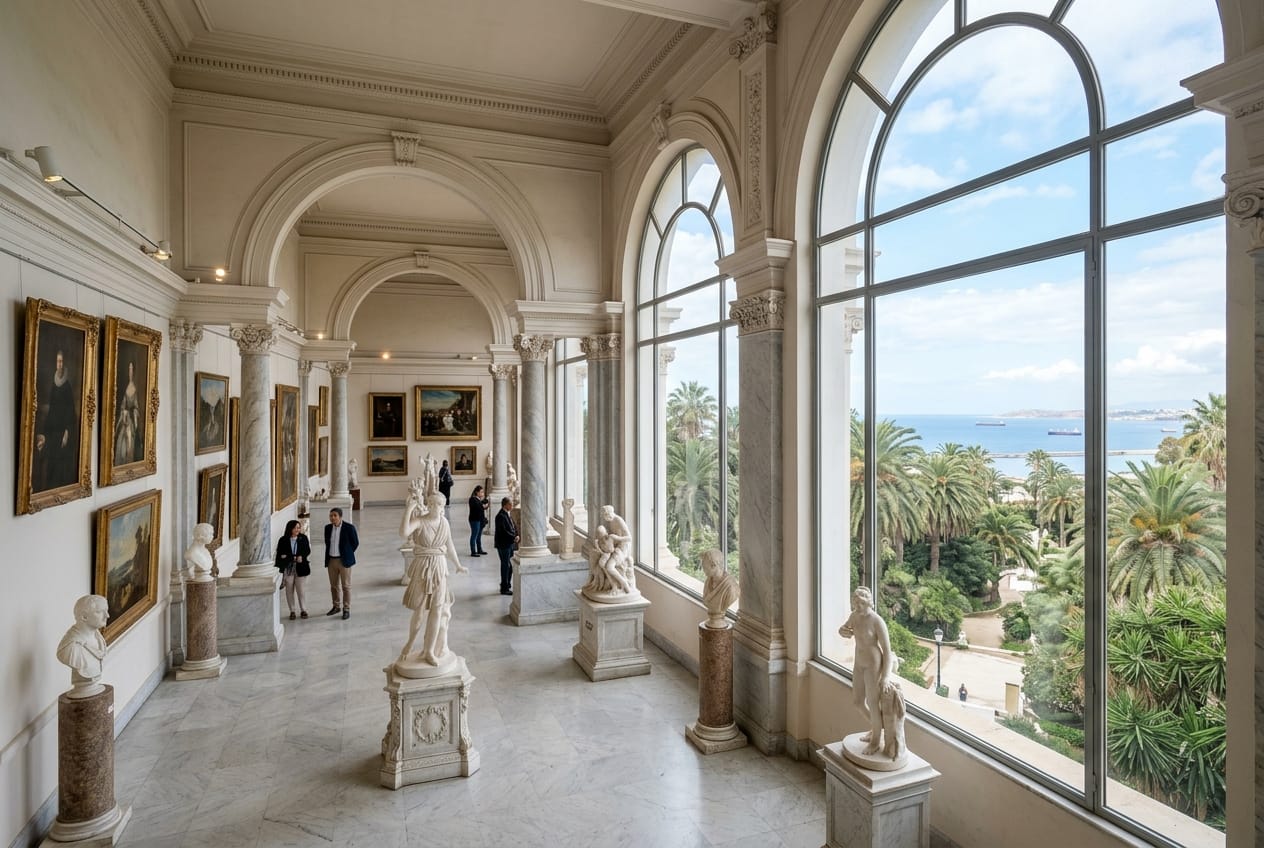
- National Museum of Fine Arts of Algiers: Situated on the heights of El Hamma, it commands sweeping views over the iconic Jardin d'Essai botanical gardens. Holding more than 8,000 cataloged works (from European masters to celebrated Algerian painters including Mohammed Racim, Baya, and M'hamed Issiakhem), it stands as the largest art collection in North Africa.
- Bardo National Museum: Housed in an exquisite 18th-century Ottoman summer villa in Telemly, it displays ethnographic treasures and the legendary tomb artifacts of Tin Hinan, Queen of the Tuareg. When planning enriching activities for kids, check our recommendations for family outings in Algeria.
2. In Oran: Ahmed Zabana Museum and Santa Cruz Fortress
Algeria's vibrant western metropolis blends naval history with breathtaking scenery:
- Ahmed Zabana National Museum: Located in downtown Oran, presenting extensive prehistoric exhibits, Islamic art, and an acclaimed natural history collection.
- Fort & Chapel of Santa Cruz: Stationed on Mount Murdjadjo at nearly 400 meters altitude, this military stronghold offers panoramic views across the Mediterranean port and city.
3. In Constantine: The Palace of Ahmed Bey and Cirta Museum
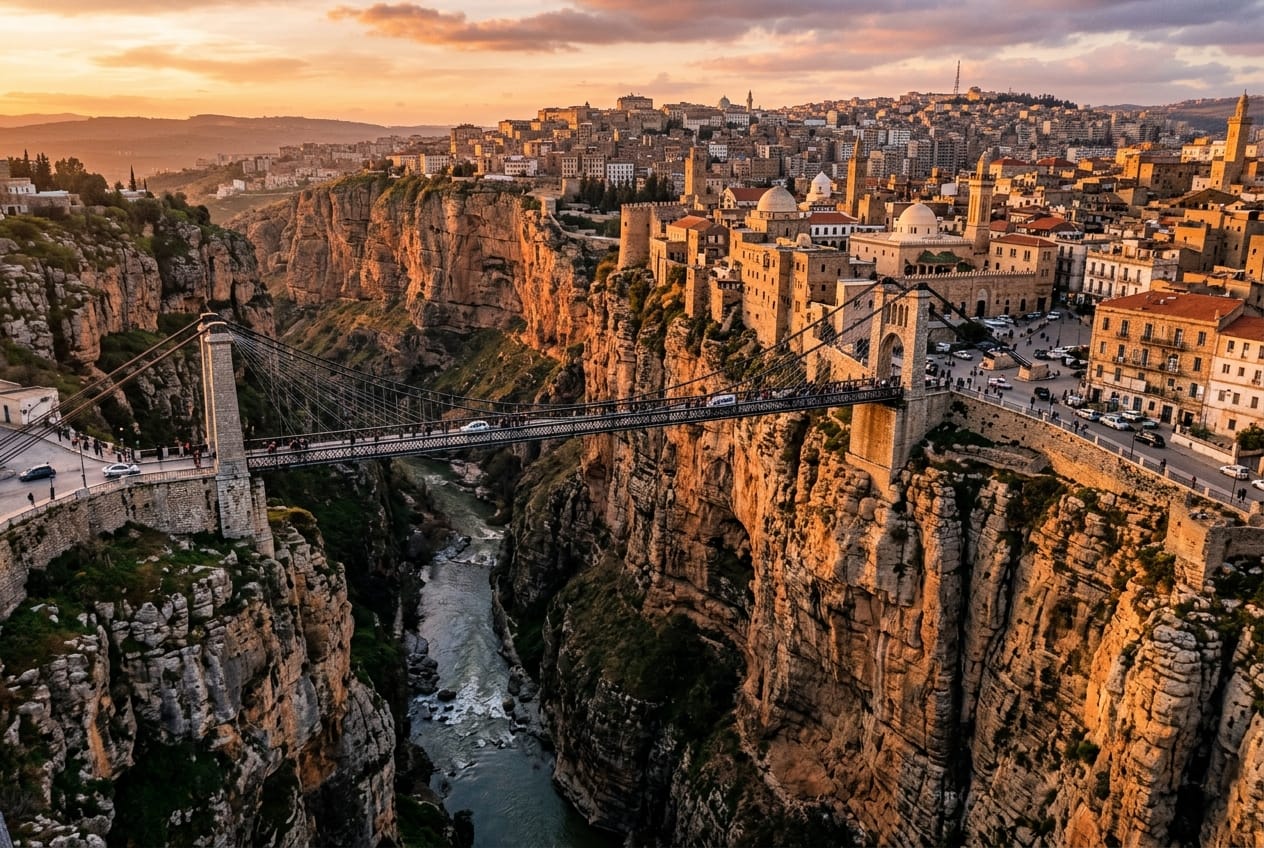
Renowned as the City of Bridges, Constantine holds legendary architectural gems:
- Palace of Ahmed Bey: Constructed between 1826 and 1835, this masterpiece of Moorish and Ottoman design spans over 5,000 square meters. Its tranquil courtyards shaded by orange trees and detailed fresco murals illustrating historic pilgrimages enchant every traveler.
- Cirta National Museum: Perched on the Coudiat plateau, conserving Numidian artifacts of King Massinissa's dynasty and Roman antiquities.
Comparative Table: Top Algerian Cultural Sites {#tableau-comparatif-sites-patrimoine}
Here is a practical overview of Algeria's landmark heritage locations to help organize your upcoming cultural itineraries:
| Site / Monument | Wilaya | Historical Era | Est. Ticket (DZD) | Best Season | Recommended Duration |
|---|---|---|---|---|---|
| Casbah of Algiers & Bastion 23 | Algiers (16) | Medieval & Ottoman | 200 DZD (Palace) | September to May | Half Day |
| Tipaza Archaeological Park | Tipaza (42) | Phoenician & Roman | 200 DZD | Autumn / Spring | 3 to 4 hours |
| Timgad Ancient City | Batna (05) | Roman (Trajan) | 150 DZD | September to November | Half Day |
| Djemila Archaeological Site | Sétif (19) | Imperial Roman | 150 DZD | September to June | 3 hours |
| Museum of Fine Arts of Algiers | Algiers (16) | Modern & Contemporary | 200 DZD | Year-round | 2 hours |
| Palace of Ahmed Bey | Constantine (25) | Ottoman (19th Century) | 200 DZD | Year-round | 2 hours |
| Santa Cruz Fortress | Oran (31) | Spanish & Ottoman | Free / 100 DZD | Late Afternoon | 2 hours |
| Royal Mausoleum of Mauretania | Tipaza (42) | Numidian (1st Century BC) | 100 DZD | Morning / Sunset | 1 hour |
Note: Admission fees in Algerian Dinars are indicative and subject to discounts for students, seniors, and school groups.
Curated Cultural Weekend Itineraries for Autumn {#itineraires-sorties-culturelles-rentree}
To make the most of September and October weekends, here are three itinerary ideas verified by the Kharja community:
Itinerary 1: Algiers Art & Heritage (Full Day)
- 09:30 AM: Guided walk through the upper and lower Casbah, finishing with fresh mint tea at Place des Martyrs.
- 12:30 PM: Authentic lunch in an atmospheric Casbah eatery or by the historic fish market.
- 02:30 PM: Explore Bastion 23 and its coastal art exhibits.
- 04:30 PM: Ride the cable car to the National Museum of Fine Arts and stroll through the adjacent Jardin d'Essai du Hamma. Pair this route with ideas from our guide to ecotourism and national parks in Algeria.
Itinerary 2: Coastal Antiquity in Tipaza (Day Trip)
- Saturday Morning: Walk the ruins of the main archaeological park in Tipaza under fragrant pine groves.
- Lunchtime: Enjoy freshly grilled Mediterranean fish at Tipaza fishing port.
- Afternoon: Discover the monumental Royal Mausoleum of Mauretania atop the Sahel hills.
Itinerary 3: Bridges & Ottoman Palaces in Constantine
- Friday Afternoon: Walk across the Sidi M'Cid suspension bridge over the limestone Rhumel canyon.
- Saturday Morning: Tour the Palace of Ahmed Bey, discovering its 121 rooms and frescoed corridors.
- Saturday Afternoon: Admire Numidian treasures at the Cirta National Museum.
If you are a guide or organizer looking to host your own themed walking tours, review our step-by-step framework in our comprehensive guide to organizing events and outings in Algeria.
Practical Tips for Memorable Heritage Visits {#conseils-pratiques-visite-patrimoine}
To guarantee an enjoyable and enriching cultural excursion, keep these recommendations in mind.
1. Hire Licensed Local Guides
Exploring historic venues like the Casbah or Timgad with a knowledgeable local guide brings ancient stones to life. A passionate guide unveils historical anecdotes, architectural secrets, and cultural lore that you would otherwise miss. Find verified local guides on the Kharja app with community ratings.
2. Prepare Proper Gear for Archaeological Sites
Ancient archaeological grounds cover wide territories:
- Wear sturdy, non-slip walking shoes suitable for uneven ancient paving stones.
- Carry a sun hat, sunglasses, and at least 1.5 liters of drinking water per person.
- Keep your camera or smartphone charged for striking architectural perspectives.
3. Respect and Protect National Heritage
Algeria is committed to protecting its precious heritage:
- Never climb upon ancient columns, delicate stone lintels, or historic cornices.
- Never pick up or remove loose stone fragments, pottery shards, or mosaic tiles.
- Leave no trace: take all personal waste with you to maintain pristine sites.
4. Leverage the Kharja App for Discovery and Booking
Use the interactive map on the Kharja app to discover all museums, historic landmarks, and art galleries nearby. View real-time opening hours, community reviews, and directly book spots for weekend cultural tours.
Explore Algerian Heritage with the Kharja App
Download Kharja for free on iOS and Android to navigate our interactive cultural map across all 58 wilayas.


Frequently Asked Questions on Algerian Cultural Outings {#faq}
Which Algerian landmarks are inscribed on the UNESCO World Heritage List?
Algeria has 7 properties inscribed on the UNESCO World Heritage List: the Casbah of Algiers, Tipaza, Timgad, Djemila, M'Zab Valley, the Kalâa of Béni Hammad, and Tassili n'Ajjer National Park.
How much are entrance fees for museums and ruins in Algeria?
Tickets are very affordable, typically ranging between 100 and 300 DZD per adult at national museums (such as the Fine Arts Museum, Bardo, and Cirta) and major archaeological sites (Tipaza, Timgad). Reductions are offered for students, while children under 12 often enter free.
Do I need to book in advance to visit the Casbah of Algiers?
General access to Casbah streets is open and free. However, to tour specific palaces (such as Bastion 23 or Mustapha Pacha Palace) or to enjoy an educational guided tour, booking in advance via verified cultural associations on Kharja is highly advised.
What is the best season to explore outdoor Roman ruins in Tipaza and Timgad?
Autumn (September through November) and Spring (March through May) are prime seasons. Temperatures are pleasantly mild, making walking across open stone terrain comfortable and picturesque.
How can I discover nearby cultural events using Kharja?
Open the Kharja app, enable location services, and select the "Culture & Heritage" category. You will instantly see open museums, current art exhibitions, and upcoming cultural walking tours scheduled across your wilaya.