Tlemcen, Jewel of the Maghreb: 2026 Heritage & Outings Guide

Last updated: November 4, 2026
Tlemcen, Jewel of the Maghreb: 2026 Heritage & Outings Guide
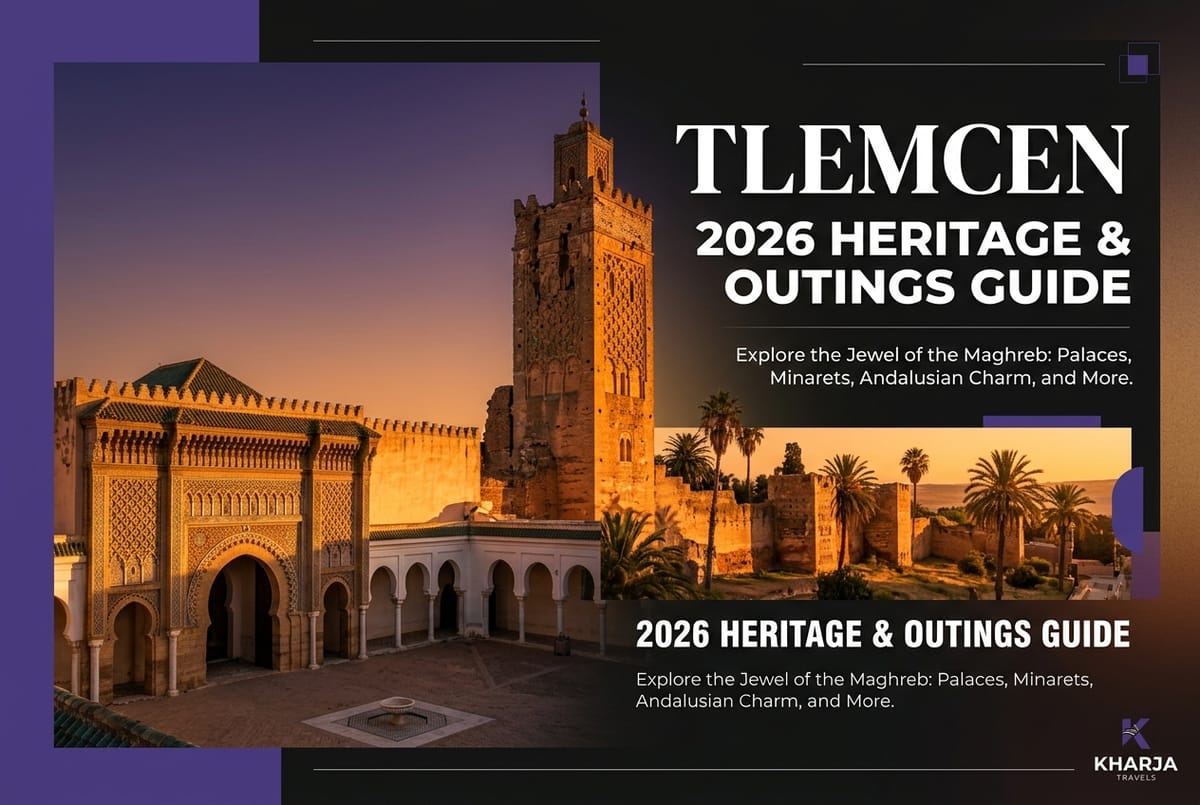
Nestled at the foot of the green Tell Atlas mountains in northwestern Algeria, standing proudly at an elevation of more than 800 meters, the historic city of Tlemcen has shone for centuries as one of the Mediterranean's most celebrated sanctuaries of art, scholarship, and Islamic architecture. As the glorious royal capital of the Zianid Kingdom (Banu Abd al-Wad) between the 13th and 16th centuries, Tlemcen preserved an extraordinary Hispano-Moorish heritage, rightfully earning its legendary title as the "Jewel of the Maghreb." Its royal fortified palaces, colossal minarets, serene Sufi shrines, and terraced gardens bear witness to a golden era when enlightened sultans turned their court into a thriving cultural crossroads linking Muslim Andalusia with North Africa.
In November 2026, autumn envelopes the Tlemcen region in a mild and delightful atmosphere. Pleasant daytime temperatures hover between 18°C and 22°C, providing perfect weather to wander through the picturesque alleys of the historic El Eubbad quarter, explore the warm ochre ruins of Mansourah, or hike under the cedar and pine canopies of the Lalla Setti plateau. Olive orchards and the cascading waters of El Ourit reflect warm golden autumn hues, creating an enchanting backdrop for cultural outings, nature excursions, and unforgettable family discoveries.
With Kharja, the premier 100% Algerian platform for discovering and organizing outings and events, experience Tlemcen with total peace of mind. Locate historic landmarks on our interactive map, book accredited local tour guides, and explore verified recommendations from our vibrant traveler community across all 58 wilayas of Algeria.
🎯 Key Takeaways
- Tlemcen served as the royal capital of the Zianid dynasty for over three centuries, housing unmatched masterpieces of Arab-Andalusian architecture in North Africa.
- The royal El Mechouar Palace and the monumental 38-meter minaret of Mansourah reflect the exceptional political and artistic grandeur of medieval Algeria.
- The spiritual sanctuary of Sidi Boumediene in El Eubbad preserves one of the finest carved cedar portals and marble courtyards in Islamic art.
- The traditional bridal costume of Tlemcen (the Tlemcen Chedda) has been inscribed on UNESCO's Representative List of the Intangible Cultural Heritage of Humanity since 2012.
- The tiered waterfalls of Cascades d'El Ourit and the ancient underground limestone formations of Béni Add Caves offer prime nature excursions within 20 minutes of the city center.
- The Lalla Setti plateau, connected by an urban cable car system, offers a complete leisure park for families with breathtaking panoramic views over the valley.
- The Kharja mobile app enables travelers to plan complete itineraries in Tlemcen, connect with licensed local guides, and read 100% verified traveler reviews.
📋 Table of Contents
- El Mechouar Royal Palace: The Beating Heart of the Zianid Dynasty
- Mansourah and Its Legendary Minaret: Vestiges of the Great Merinid Siege
- The Sanctuary of Sidi Boumediene in El Eubbad: Spiritual and Architectural Wonder
- Lalla Setti Plateau and Cable Car: Panoramic Vistas and Family Leisure
- Cascades d'El Ourit and Béni Add Caves: Tlemcen's Scenic Nature Escapes
- Living Craftsmanship: UNESCO-Inscribed Chedda and Tlemcenian Gastronomy
- Comparative Overview of Top Attractions and Outings in Tlemcen
- Practical Tips for Planning Your Tlemcen Trip with the Kharja App
- Frequently Asked Questions About Outings in Tlemcen
El Mechouar Royal Palace: The Beating Heart of the Zianid Dynasty {#el-mechouar-royal-palace-the-beating-heart-of-the-zianid-dynasty}
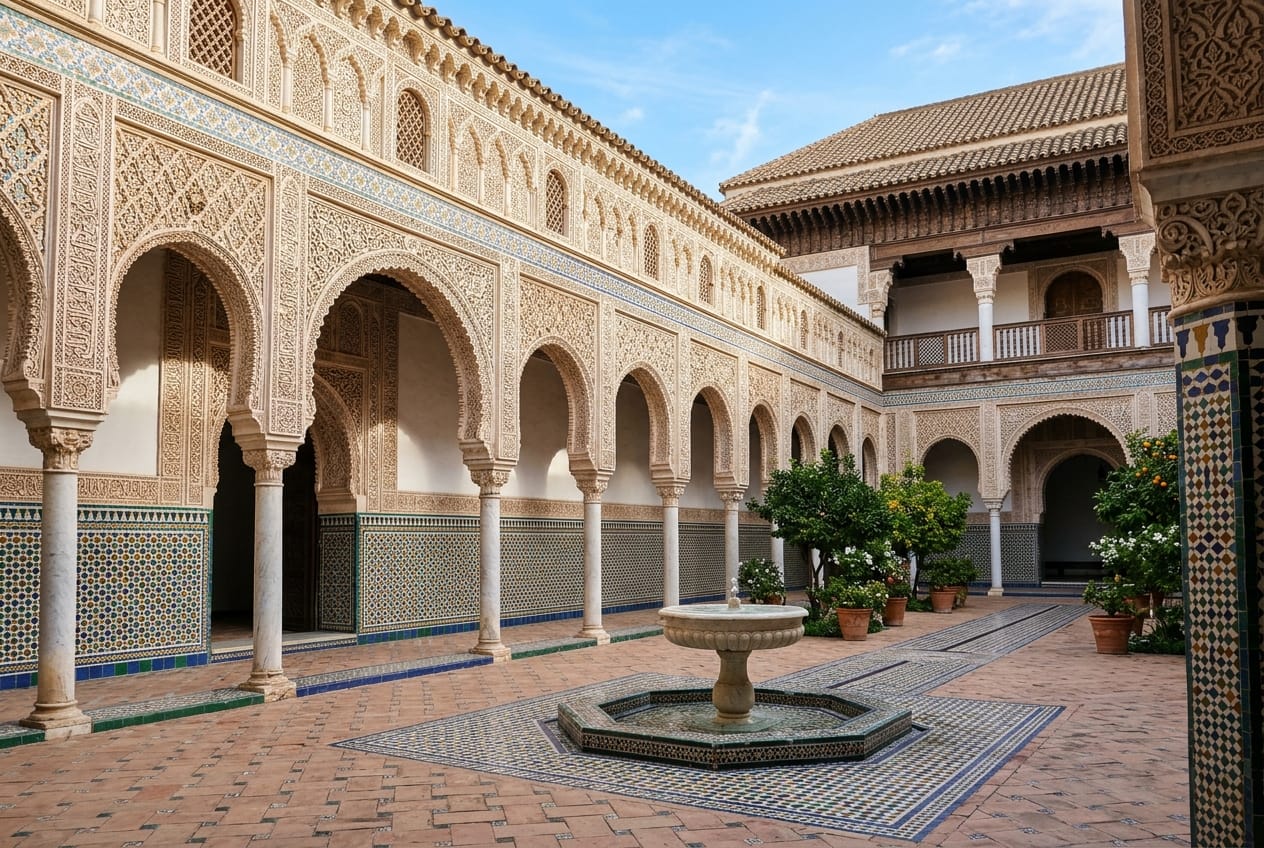
Erected in the 13th century by Zianid monarch Yaghmurasen Ibn Zyan, the royal El Mechouar Palace stands as the supreme masterpiece of Hispano-Moorish palace architecture in downtown Tlemcen.
Constructed in 1248 upon earlier Almoravid military grounds, El Mechouar fulfilled multiple vital roles: royal residence for reigning sultans, administrative seat of government, and a heavily fortified citadel enclosed by defensive rammed-earth ramparts. Throughout the Zianid golden age, this expansive complex housed fragrant gardens, intricate fountain pavilions, and ceremonial audience halls where celebrated poets and Andalusian scholars sought royal patronage.
Following comprehensive historical restoration, the palace now welcomes visitors with sparkling marble courtyards, serene reflecting pools, and hand-sculpted fountains. Gallery walls feature intricately carved alabaster stucco panels adorned with arabesques and Arabic calligraphy, crowned by vibrant geometric ceramic tiles (zellige) directly reminiscent of Granada's Alhambra. Visiting El Mechouar in autumn guarantees quiet strolls without peak summer crowds. For travelers passionate about regional heritage, explore our comprehensive guide on Algerian cultural outings and historic monuments.
Mansourah and Its Legendary Minaret: Vestiges of the Great Merinid Siege {#mansourah-and-its-legendary-minaret-vestiges-of-the-great-merinid-siege}
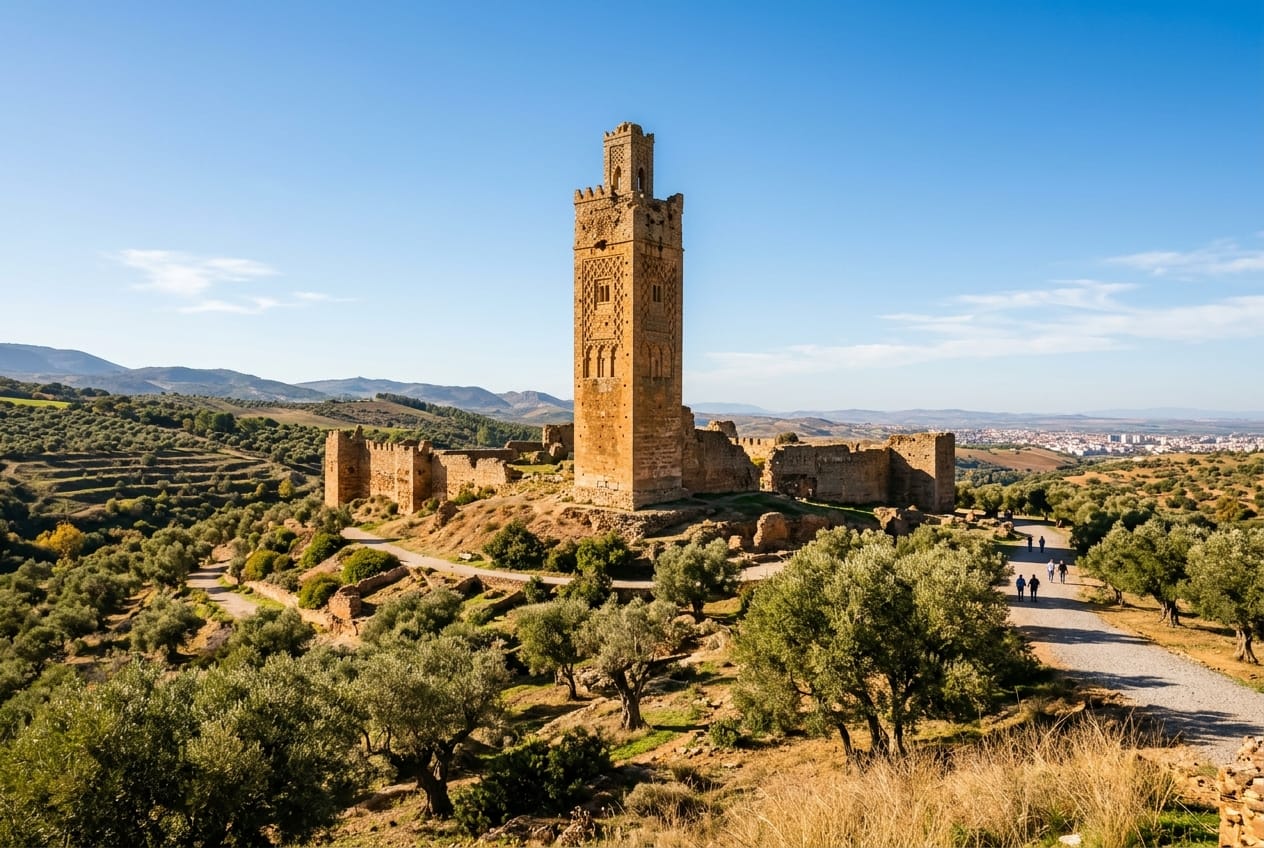
The archaeological complex of Mansourah and its monumental 38-meter-high minaret stand as the imposing ruins of a fortified siege city built in the early 14th century by Merinid Sultan Abu Yaqub.
For more than eight long years, between 1299 and 1307, the Merinid sultan laid siege to the fortress of Tlemcen. Unable to breach the city's formidable Zianid walls, Abu Yaqub decided to construct an entire rival royal city directly facing Tlemcen, named "El Mansourah" (The Victorious). This vast fortified settlement contained royal palaces, military barracks, hammams, and a grand congregational mosque built to rival the finest structures of Fez and Cordoba.
Today, the most awe-inspiring remaining landmark is the standing southern half of the Mansourah minaret. Rising 38 meters above the surrounding countryside, this ochre limestone tower showcases majestic horseshoe arches, delicate stone filigree, and bands of turquoise glazed tile. Walking along the ancient ramparts extending across surrounding olive groves evokes the dramatic medieval power struggles between North African dynasties. The late afternoon sunlight in November bathes the weathered stones in warm amber radiance.
The Sanctuary of Sidi Boumediene in El Eubbad: Spiritual and Architectural Wonder {#the-sanctuary-of-sidi-boumediene-in-el-eubbad-spiritual-and-architectural-wonder}
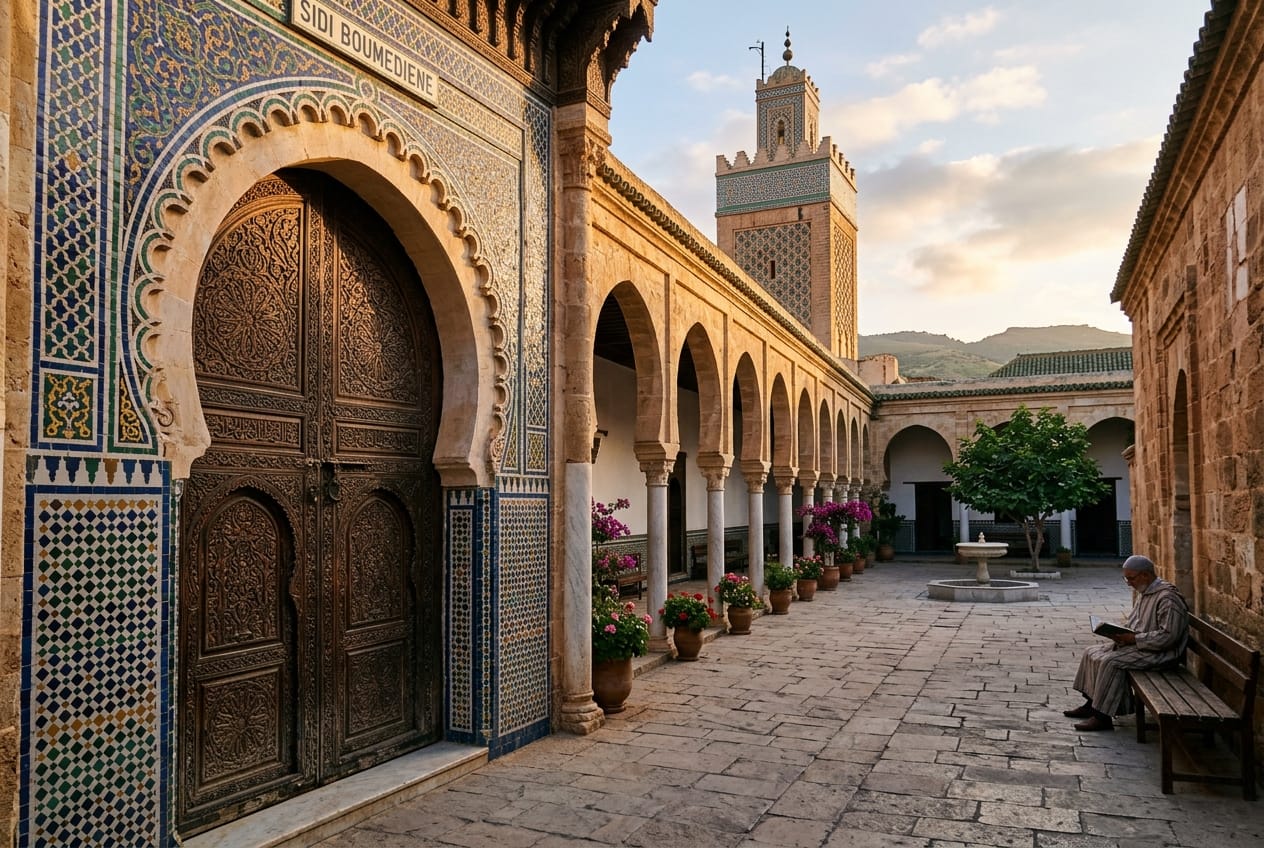
Perched above Tlemcen in the historic village of El Eubbad, the spiritual complex of Sidi Boumediene comprises an ancient Sufi mausoleum, a 14th-century Merinid mosque, and a theological college.
The hillside enclave of El Eubbad radiates an aura of quiet serenity and profound spiritual heritage. Born in Seville in the 12th century, the revered Andalusian philosopher and Sufi master Abu Madyan (affectionately known as Sidi Boumediene) selected this tranquil hill as his final resting place. Centuries later, Merinid Sultan Abu al-Hasan erected an opulent religious complex here honoring the saint, featuring a domed mausoleum (Qobba), an exquisite mosque, a college (medersa), and traditional baths.
The monumental portal of Sidi Boumediene Mosque captivates onlookers: its grand entrance boasts authentic Atlas cedar wood doors overlaid with masterfully chased bronze leaf. Inside, an onyx-tiled open-air courtyard and a prayer hall supported by horseshoe arches demonstrate exquisite mathematical symmetry. The fragrant aroma of incense, gentle trickling fountain waters, and expansive valley views make this visit an unforgettable spiritual and artistic experience. Compare this historic charm with the ancient fortified oases in our guide to Ghardaïa and the M'Zab Valley.
Lalla Setti Plateau and Cable Car: Panoramic Vistas and Family Leisure {#lalla-setti-plateau-and-cable-car-panoramic-vistas-and-family-leisure}
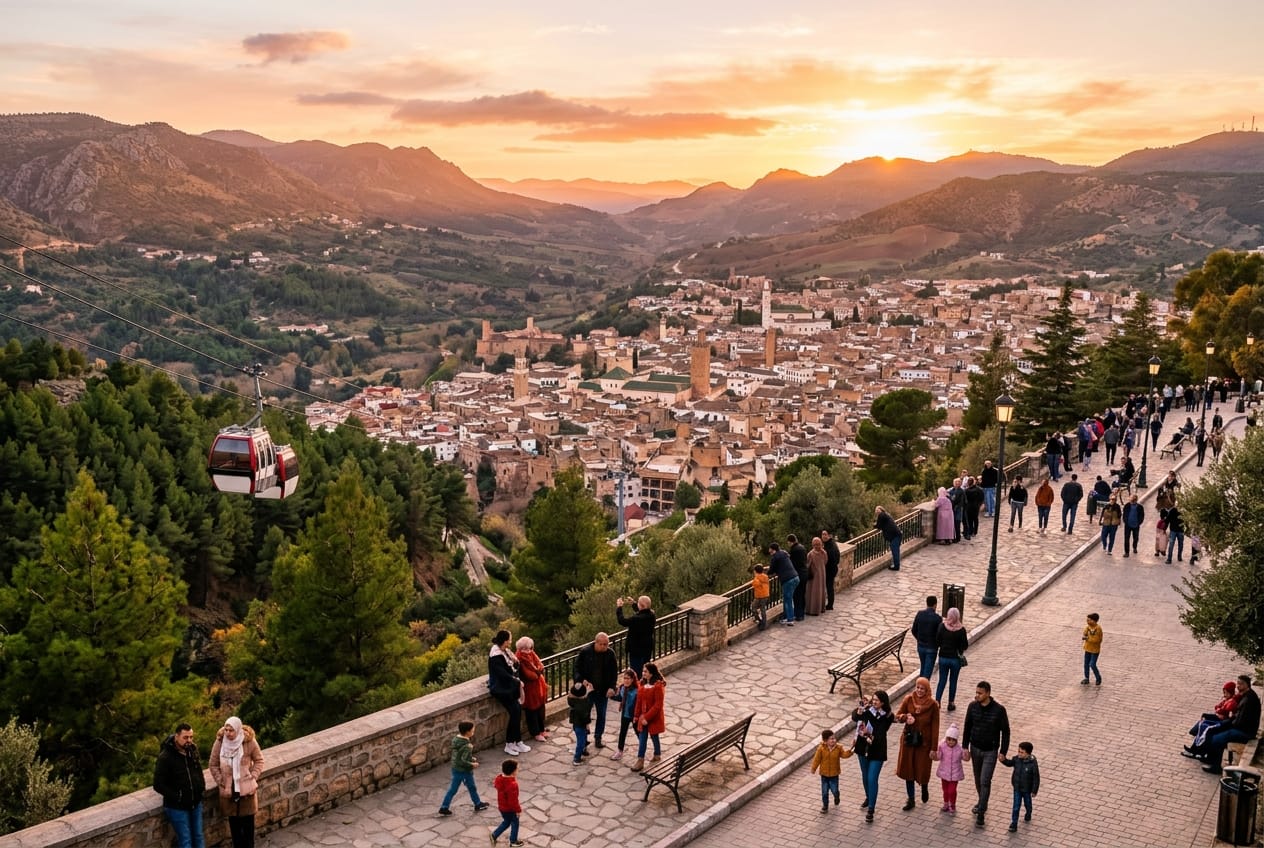
Towering over Tlemcen at more than 1,000 meters above sea level, the Plateau of Lalla Setti represents the city's favorite recreational green haven, beloved for family outings, pine forest walks, and spectacular sunset views.
Connected to the city center via a modern urban cable car system departing from El Kalaa, reaching the plateau is an exciting adventure in itself. The glass gondolas glide silently over red-tiled roofs, tiered fruit orchards, and dense pine hills, presenting breathtaking aerial vistas over Tlemcen and the surrounding plains.
At the summit, the plateau has been developed into an expansive modern recreational park:
- The Artificial Lake: A scenic freshwater basin where families can rent pedal boats and enjoy peaceful strolls along shaded paved paths.
- Children's Amusement Park: Safe carousels, inflatable playgrounds, and go-kart tracks designed for children and teenagers.
- Zarifet Recreational Forest: Pine-scented nature trails ideal for brisk morning walks, trail runs, and relaxed autumn family picnics.
- Panoramic Sunset Promenade: A wide viewing esplanade lined with traditional tearooms and ice-cream parlors where locals gather at dusk to watch city lights illuminate below.
This destination highlights Tlemcen's unique ability to blend deep historical roots with contemporary outdoor leisure. To explore more Algerian outdoor destinations, check out our guide on Ecotourism and National Parks in Algeria.
Cascades d'El Ourit and Béni Add Caves: Tlemcen's Scenic Nature Escapes {#cascades-del-ourit-and-beni-add-caves-tlemcens-scenic-nature-escapes}
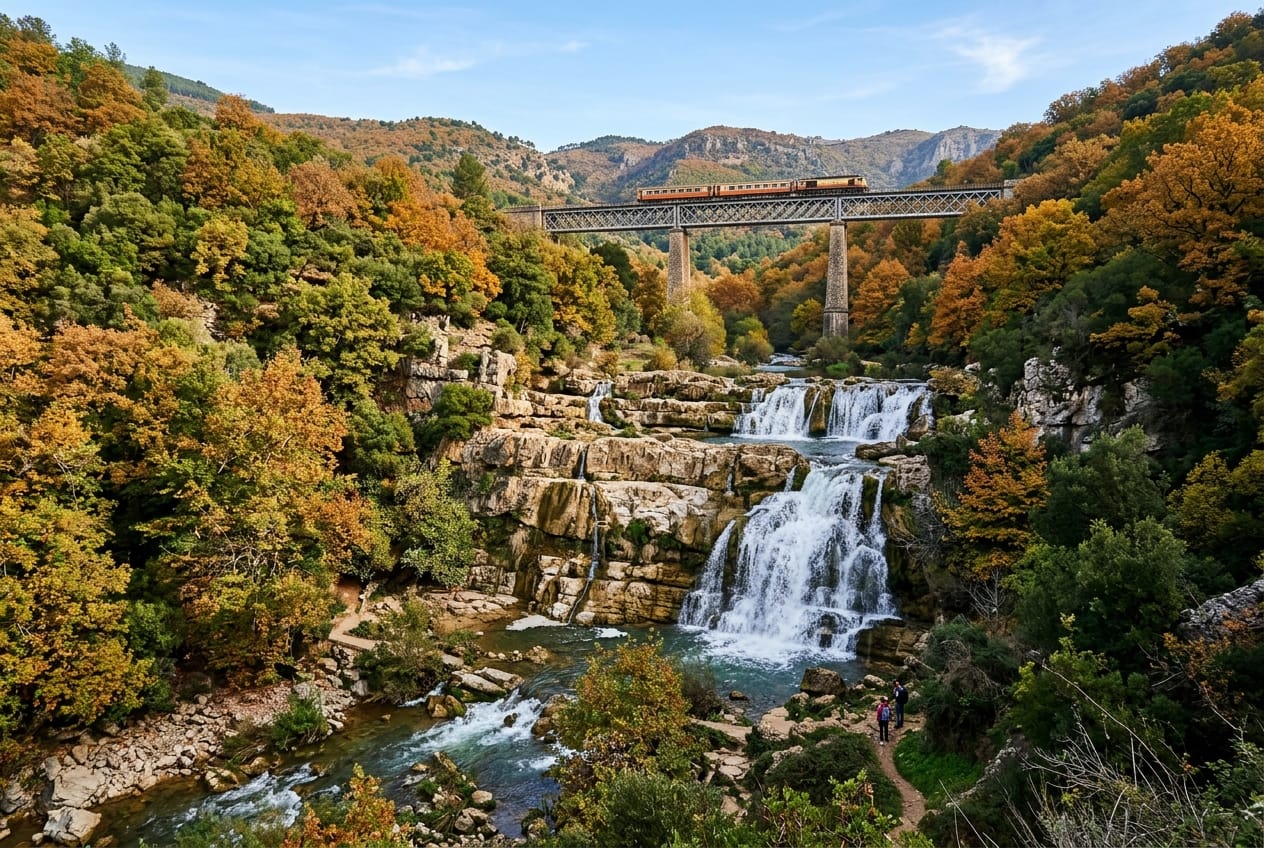
Located just 7 kilometers northeast of Tlemcen, the cascading waterfalls of El Ourit and the ancient underground limestone chambers of Béni Add Caves provide world-class geological and natural excursions.
Set inside a dramatically carved rocky gorge, Cascades d'El Ourit features a series of sparkling mountain waterfalls that tumble over natural limestone terraces into pristine natural pools. Soaring high above the cascades stands a remarkable late 19th-century engineering landmark: a metallic railway viaduct engineered by the ateliers of Gustave Eiffel. Watching a passenger train cross this elevated steel structure while waterfalls cascade below is a photographer's dream. During autumn, increased rainfall brings the falls to life amidst golden foliage.
Continuing higher into the mountains towards Aïn Fezza, the Béni Add Caves provide an awe-inspiring subterranean adventure extending 57 meters below the earth. Discovered in prehistoric times and fully equipped with walkways and artistic illumination, these limestone caverns display a forest of sparkling stalactites and stalagmites sculpted over 65,000 years. With a constant year-round temperature of 13°C, the caverns feature cavernous rooms including the "Hall of Flags" and the "Queen's Chamber," proving that Tlemcen offers raw geological grandeur alongside regal history.
Living Craftsmanship: UNESCO-Inscribed Chedda and Tlemcenian Gastronomy {#living-craftsmanship-unesco-inscribed-chedda-and-tlemcenian-gastronomy}
Tlemcen boasts celebrated artisan traditions, crowned by UNESCO's inscription of the traditional bridal costume (the Tlemcen Chedda) as world intangible cultural heritage, accompanied by exquisite Andalusian-inspired cuisine.
The Tlemcen Chedda, an elaborate bridal attire worn during traditional wedding ceremonies, is a living masterpiece crafted by master gold-thread embroiderers (fetla and majboud), silk weavers, and fine jewelers. Featuring a heavily embroidered velvet caftan, shimmering cascading pearl necklaces, and traditional gold forehead crowns (kheyt er-rouh), it reflects ancestral feminine dignity and royal elegance. Visiting historic workshops in Tlemcen's Kissaria district provides rare opportunities to watch master artisans at work preserving centuries-old techniques.
Food lovers will discover extraordinary regional culinary heritage:
- Kâak of Tlemcen and El Ourit: Ring-shaped sweet dry biscuits flavored with aniseed, fennel, and freshly distilled wild orange blossom water.
- Tlemcenian Harira: Silky sourdough soup infused with caraway, fresh coriander, ginger, and tender lamb, traditionally served at festive banquets.
- Pastilla: Crispy layered pastry filled with spiced poultry, toasted almonds, and cinnamon-a direct legacy of refugees from Granada and Cordoba.
- Refined Pastries: Griouech dipped in fragrant orange blossom honey, Halwet El Krafef, and melt-in-the-mouth boussou la tmessou.
Find authentic tearooms, master embroidery ateliers, and reputable traditional restaurants on the Kharja mobile app.
Comparative Overview of Top Attractions and Outings in Tlemcen {#comparative-overview-of-top-attractions-and-outings-in-tlemcen}
The following comparative table summarizes the essential details for Tlemcen's top 6 visits to help you easily organize your travel schedule.
| Outing / Attraction | Activity Category | Recommended Duration | Estimated Budget (DZD) | Best Suited For | Optimal Time of Day |
|---|---|---|---|---|---|
| El Mechouar Palace | Historic palace & architecture | 1h30 to 2h00 | 200 - 400 DZD / person | History enthusiasts, families | Morning (bright courtyard light) |
| Mansourah Ruins | Archaeological site & outdoor walk | 1h00 to 1h30 | Free admission | Photographers, casual walkers | Late afternoon (sunset glow) |
| Sidi Boumediene (El Eubbad) | Spiritual heritage & medersa | 2h00 | Free (guided tour optional) | Cultural travelers, seniors | Early afternoon |
| Lalla Setti Plateau | Cable car, parks & panoramic views | Half-day | 100 DZD (return cable car) | Families with kids, groups | Afternoon until dusk |
| Cascades d'El Ourit | Waterfalls, nature & Eiffel viaduct | 1h30 to 2h00 | Free admission | Hikers, nature lovers | Sunny morning |
| Béni Add Caves | Subterranean geological tour | 1h30 | 300 - 500 DZD / person | Families, adventure seekers | Midday |
Practical Tips for Planning Your Tlemcen Trip with the Kharja App {#practical-tips-for-planning-your-tlemcen-trip-with-the-kharja-app}
To ensure an extraordinary journey through Tlemcen this autumn 2026, keep these expert recommendations in mind:
- Pack Layered Clothing: Daytime autumn temperatures in November are pleasantly warm (around 20°C), but evening breezes on Lalla Setti plateau and mountain heights quickly drop below 10°C. A warm sweater or light jacket is essential.
- Take Advantage of the Urban Cable Car: To reach Lalla Setti without winding mountain drives or parking delays, the city's cable car from El Kalaa provides a fast, scenic, and budget-friendly ascent.
- Hire an Accredited Local Guide: Uncovering the nuances of Zianid, Almoravid, and Merinid history becomes infinitely richer when guided by a certified local historian. Connect with vetted guides through Kharja's directory.
- Taste Freshly Baked Kâak in the Medina: Don't leave without tasting warm kâak biscuits directly from traditional wood-fired ovens near Bab Zir.
- Use Kharja's Interactive Map for Real-Time Navigation: With precise geolocation across Algeria's 58 wilayas, locate nearby monuments, verified dining spots, and secure parking areas with one tap.
For another unforgettable journey through Algeria's imperial history, read our comprehensive travel guide on Constantine and Its Famous Suspension Bridges.
Frequently Asked Questions About Outings in Tlemcen {#frequently-asked-questions-about-outings-in-tlemcen}
What is the best season to travel to Tlemcen?
Spring (April to June) and autumn (September through late November) are the ideal times to visit Tlemcen. Weather conditions are delightfully temperate, mountain hillsides are vibrant, and heritage monuments can be explored without extreme summer heat or winter mountain snow.
How much does the cable car ticket to Lalla Setti plateau cost?
A round-trip ticket on the urban cable car connecting central Tlemcen to Lalla Setti plateau typically costs between 60 and 100 DZD per person. It is an affordable, scenic, and family-friendly ride that avoids traffic and offers breathtaking aerial views over the entire city.
Can the traditional Tlemcen Chedda be viewed in local museums?
Yes, authentic Tlemcen Chedda bridal gowns are permanently displayed at the National Public Museum of Art and History in Tlemcen (near El Mechouar Palace) and the Andalusian Studies Center. Local master embroidery workshops also offer private viewings organized via the Kharja app.
How do travelers get to Cascades d'El Ourit and Béni Add Caves?
Cascades d'El Ourit is located just 7 kilometers northeast of downtown along national highway RN7. Béni Add Caves are situated approximately 15 kilometers away in Aïn Fezza. Both sites are readily accessible by city taxi, private car, or organized day excursions booked through Kharja.
How many days are recommended for a full visit of Tlemcen?
A stay of two to three full days is strongly recommended to thoroughly enjoy Tlemcen's highlights: Day 1 dedicated to central historical landmarks (El Mechouar, Mansourah, Great Mosque), Day 2 exploring El Eubbad and Lalla Setti plateau, and Day 3 visiting natural wonders (El Ourit waterfalls and Béni Add Caves).


About Kharja
Kharja (kharja.life) is Algeria's leading 100% home-grown discovery platform for outings, cultural events, and outdoor experiences across all 58 wilayas. Available free on iOS, Android, and Web, Kharja connects passionate travelers with local event organizers, licensed guides, and hidden gems throughout the nation.
Follow our official social channels for updates and destination inspiration:
- Instagram: @kharja_life
- Facebook: Kharja خرجة
- TikTok: @kharja_life
- X (Twitter): @kharja_life
- YouTube: @Kharja_life