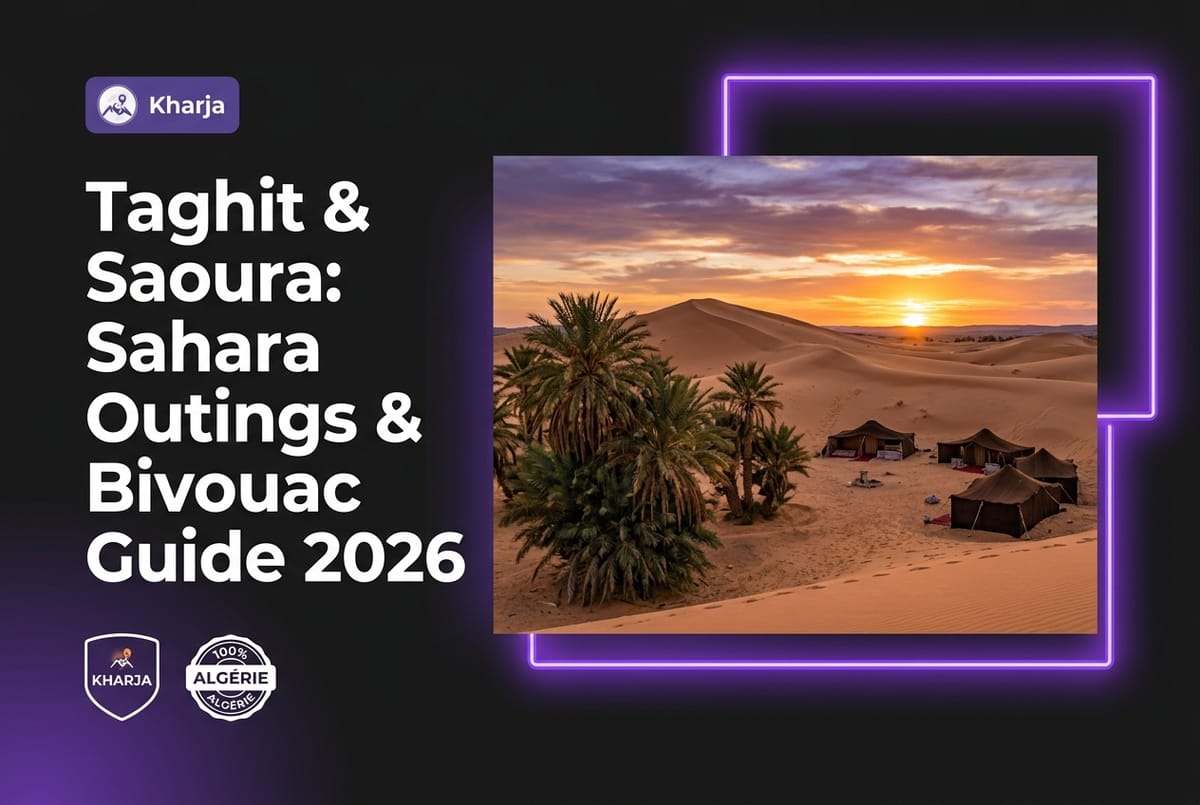
Taghit & Saoura: Sahara Outings & Bivouac Guide 2026
Last updated: September 30, 2026
Taghit & Saoura: Sahara Outings & Bivouac Guide 2026
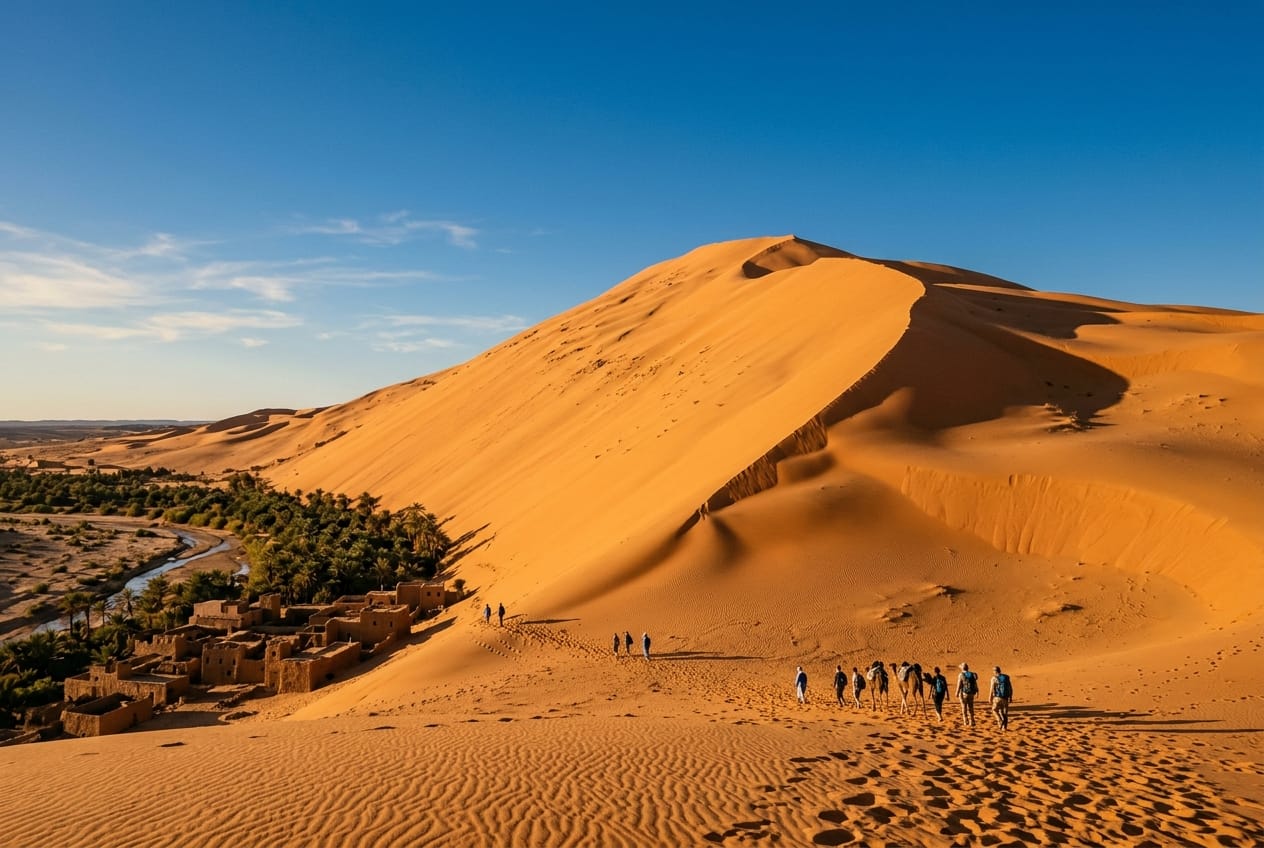
Known across North Africa as the "Enchantress" and the "Pearl of the Saoura", Taghit is without question one of the most stunning oasis destinations in the Algerian Sahara. Nestled in the Bechar province right against the golden eastern edge of the Grand Erg Occidental, this historic oasis seems plucked from a desert dreamscape: an emerald ribbon of over one hundred thousand date palms directly meeting towering orange sand dunes that rise nearly two hundred meters into the clear sky.
As early October heralds the official opening of the Algerian Saharan tourism season, Taghit boasts pristine weather conditions: crystal-clear azure skies, sunny afternoon temperatures hovering around 25°C (77°F), and brisk desert nights ideal for stargazing by the campfire. Thanks to Kharja, Algeria's premier event and outing platform, organizing your desert journey to Taghit has never been simpler: verified camp locations, contacts for certified local guides, 4x4 dune tours, and authentic community reviews are readily accessible right from your smartphone.
Whether you are eager to sandboard down the Great Dune, wander the shaded adobe corridors of the 11th-century Ksar, admire millennia-old Neolithic rock engravings, or share the timeless ritual of nomadic mint tea, this comprehensive 2026 travel guide gives you all the essential insights for an unforgettable journey into the Saoura Valley.
🎯 Key Takeaways
- Taghit is celebrated for its colossal Great Dune rising over 150 meters high, offering one of the most dramatic desert sunset panoramas in all of North Africa.
- The ancient Ksar of Taghit, founded in the 11th century using rammed earth and date palm trunks, represents a masterpiece of Saharan bioclimatic architecture.
- The prehistoric archaeological site of Zaouia Tahtania displays hundreds of remarkably preserved Neolithic petroglyphs depicting antelopes, ostriches, and gazelles from a lush prehistoric Sahara.
- The peak travel season runs from October to April, kicking off in early autumn when mild temperatures make outdoor desert hiking, camel trekking, and bivouacs extremely comfortable.
- The Kharja mobile app enables travelers to seamlessly locate registered desert camps, connect with trusted local desert guides, and read verified traveler feedback across Algeria's 58 provinces.
📋 Table of Contents
- The Great Dune of Taghit: Thrills and Golden Panoramas
- The Ancient Ksar of Taghit: An Adobe Architectural Wonder
- The Rock Engravings of Zaouia Tahtania: Prehistoric Mysteries
- Desert Bivouac and Starlit Nights: Nomad Tea and Campfires
- The Lush Palm Oasis and Oued Saoura: Agriculture and Ancient Foggaras
- Comparative Table of Top Activities and Outings in Taghit
- Practical Travel Tips: Transportation, Budget, and Kharja App
- Frequently Asked Questions About Visiting Taghit
The Great Dune of Taghit: Thrills and Golden Panoramas {#the-great-dune-of-taghit-thrills-and-panoramas}
The Great Dune of Taghit is an immense natural monument of golden sand rising nearly 200 meters high, serving as the southern gateway to the Grand Erg Occidental.
Climbing to the summit of the Great Dune is the iconic highlight of any journey to Taghit. While trekking up the soft dune crest requires a brisk 30 to 45-minute physical effort, the 360-degree panorama at the top is nothing short of breathtaking: endless rolling waves of orange desert dunes stretch endlessly to the north and west, contrasting dramatically with the lush green date grove and rustic clay rooftops of the village below.
For adrenaline enthusiasts, sandboarding down the sheer dune slopes has become an international bucket-list activity. Local rental operators and desert tour outfits featured on Kharja supply specialized waxed boards for gliding smoothly down the sand. In addition, guided quad and buggy tours along the desert fringes allow visitors to safely experience the thrilling topography of the dunes. At sunset, as the fading sun turns the sand into fiery copper and purple hues, the view is pure magic. If you are passionate about Algeria's natural expanses, make sure to also explore our complete guide to the best hikes in Algeria.
The Ancient Ksar of Taghit: An Adobe Architectural Wonder {#the-ancient-ksar-of-taghit-architectural-wonder}
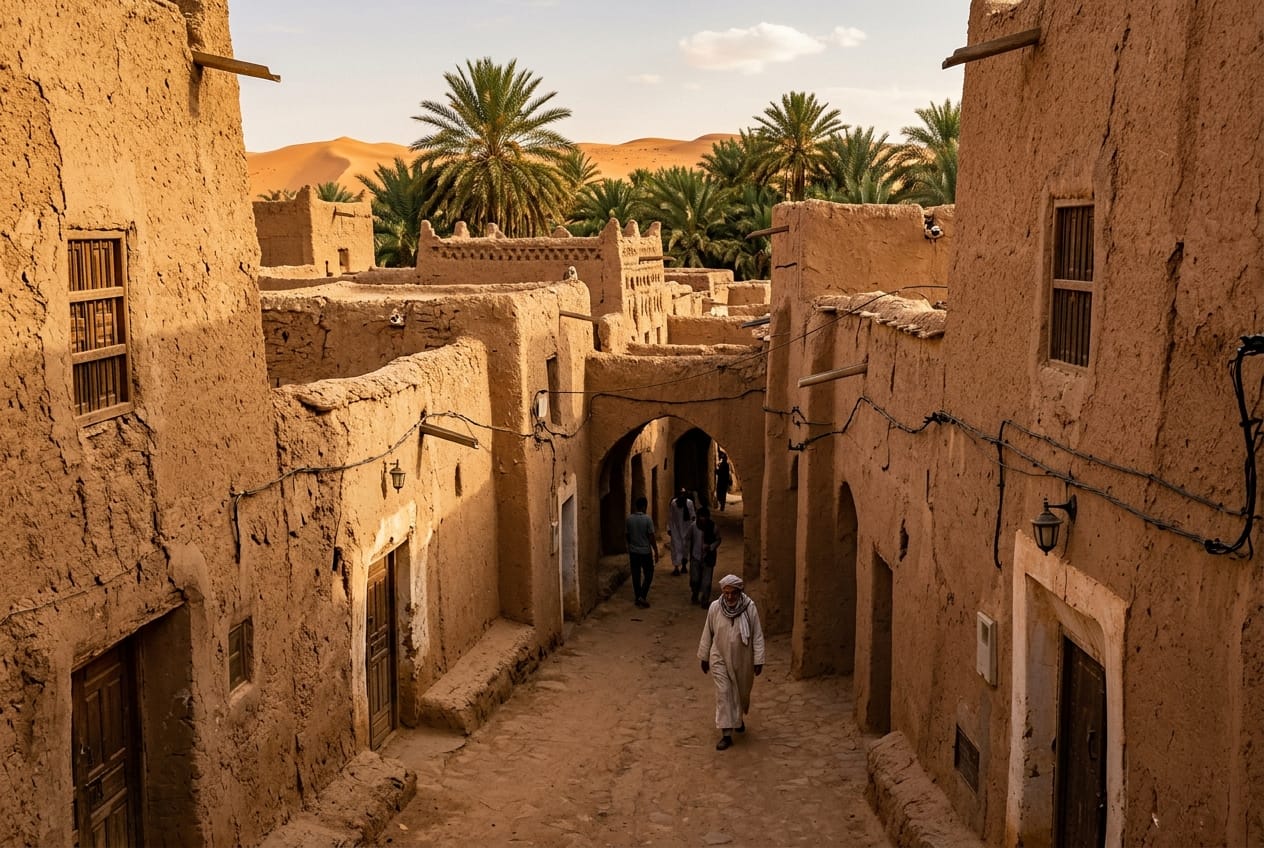
The ancient Ksar of Taghit is a fortified mud-brick village founded in the 11th century, demonstrating centuries of ingenious Saharan bioclimatic engineering.
Built strategically against a rocky crag to safeguard inhabitants against unpredictable flash floods from the Oued Zouzfana and historical desert raids, the ksar harmonizes flawlessly with its desert surroundings. Constructed entirely of sun-baked adobe bricks (toub), clay plaster, and sturdy date palm trunks, the village forms an intricate labyrinth of covered corridors (sabats) that naturally regulate ambient temperatures, keeping interior alleyways pleasantly cool even during midday sun.
Strolling through its peaceful pedestrian streets reveals ornate wooden doorways secured with antique Berber locks (khelba), intimate public courtyards, and the ksar's historic clay mosque featuring a distinctive conical minaret unique to the Saoura region. Several ancestral houses have been carefully restored by heritage enthusiasts to house artisan workshops, traditional Saharan rug weaving centers, and folk museums. As highlighted in our overview of Algeria's most iconic cultural heritage destinations, these Saharan ksour represent an invaluable cultural treasure currently inscribed on the UNESCO World Heritage Tentative List.
The Rock Engravings of Zaouia Tahtania: Prehistoric Mysteries {#zaouia-tahtania-rock-art-neolithic-mysteries}
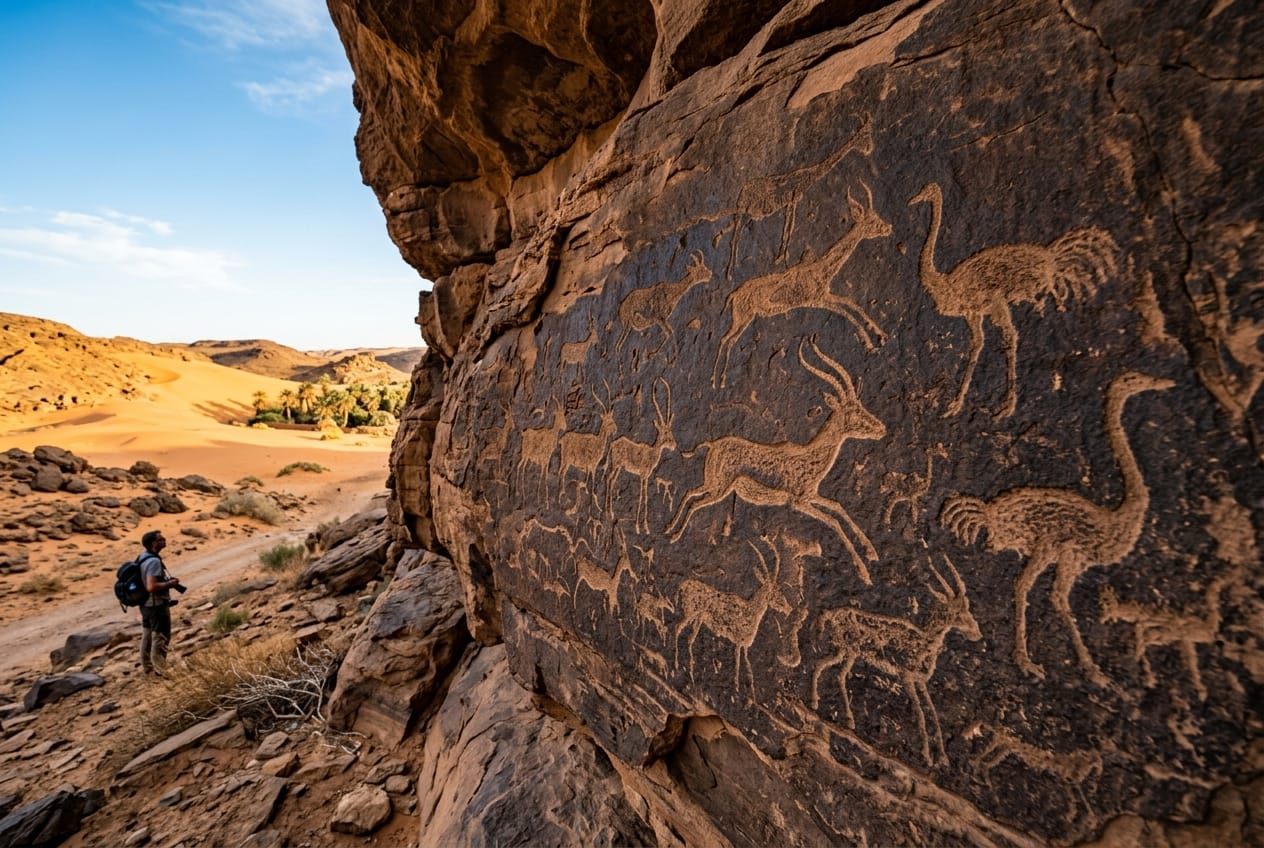
The archaeological site of Zaouia Tahtania, located less than 2 kilometers south of central Taghit, features one of the most prominent open-air Neolithic rock engraving galleries in the Sahara.
Carved into dark desert sandstone cliffs polished by desert winds over millennia, these prehistoric petroglyphs date back to the Neolithic period (between 7,000 and 4,000 BC). They vividly document the rich savanna wildlife that roamed this territory before its climate aridification: long-horned cattle, detailed ostriches with feathered contours, gazelles, agile antelopes, and even desert lions.
Exploring this open-air museum provides an eye-opening glimpse into ancient North African human ecology. To fully appreciate the archaeological significance and folklore behind each drawing, hiring an accredited local heritage guide through the Kharja app is highly recommended. Visiting during early morning hours or late afternoon brings out the clearest relief shadows on the stone engravings.
Desert Bivouac and Starlit Nights: Nomad Tea and Campfires {#desert-bivouac-and-starlit-nights}
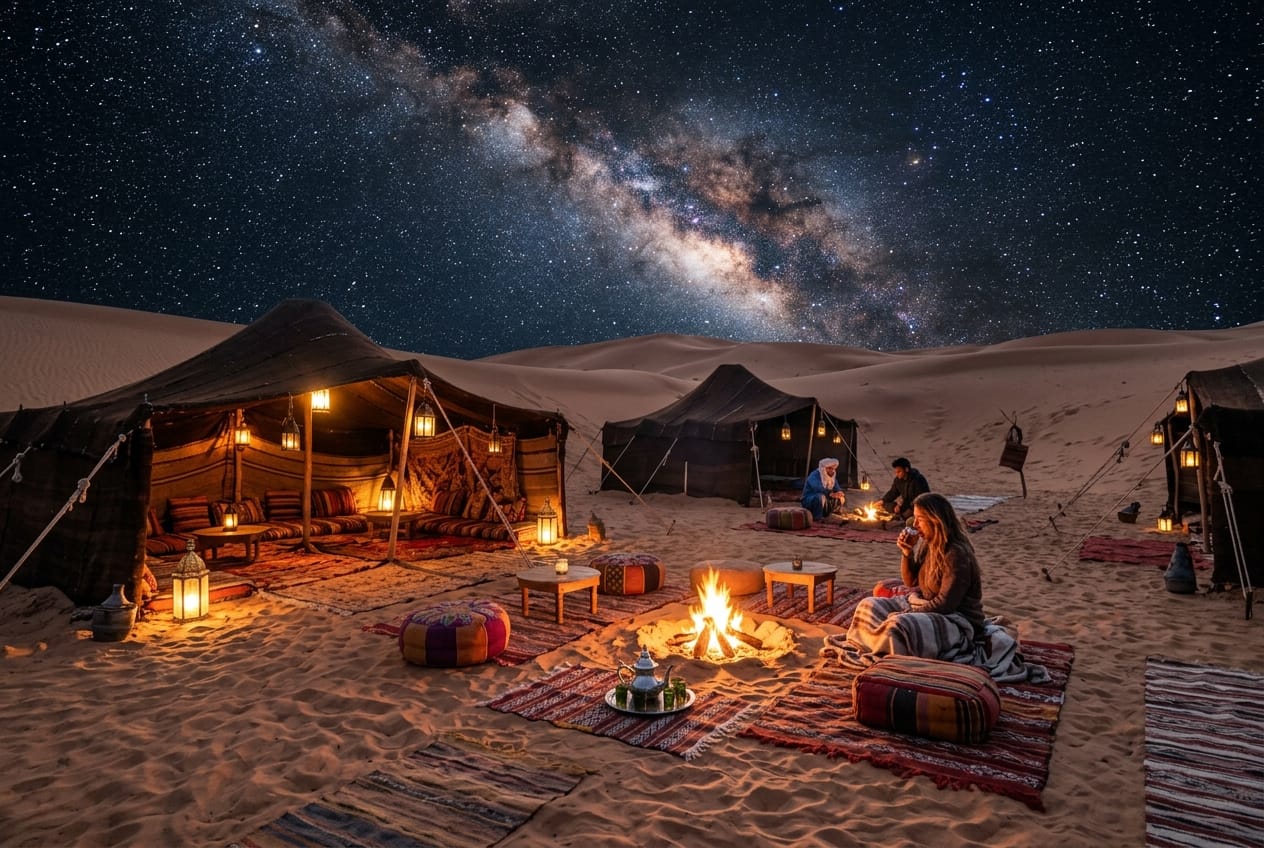
Spending a night in a desert bivouac deep within the dunes of Taghit is an unforgettable experience connecting travelers with the quiet grandeur of the Sahara.
Free from urban light pollution, the night sky over Taghit is mesmerizing: the arching ribbon of the Milky Way, constellations, and shooting stars sparkle with extraordinary brilliance. Traditional nomadic camps tucked into sheltered dune hollows offer welcoming hospitality under woven camel-hair tents (khaïmas) equipped with comfortable mattresses, authentic rugs, and warm blankets.
Evenings revolve around the glowing embers of the campfire, where nomadic hosts prepare fresh Taguella (traditional desert flatbread baked beneath hot sand and embers), followed by a flavorful stew of local lamb and garden vegetables. After dinner comes the revered Saharan tea ceremony: three distinct glasses of sweet green mint tea poured with high frothy crowns. Accompanied by the soothing acoustic rhythms of the oud and tindi drum played by Saoura musicians, these nights foster heartwarming camaraderie.
The Lush Palm Oasis and Oued Saoura: Agriculture and Ancient Foggaras {#the-lush-palm-oasis-and-oued-saoura}
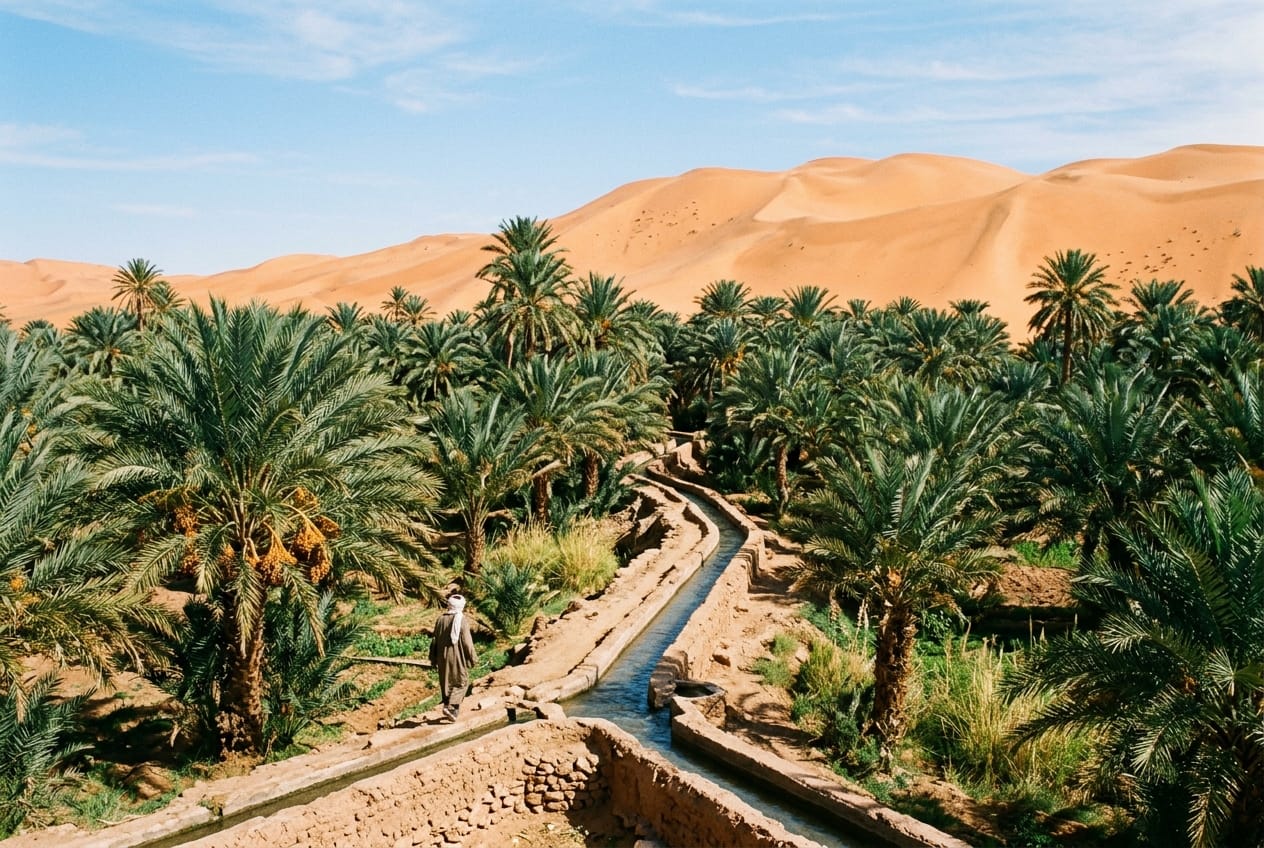
The date palm oasis of Taghit spans nearly 20 kilometers along the seasonal bed of Oued Zouzfana, nurturing a remarkable agricultural microclimate in the desert.
Sheltered by the towering canopy of productive date palms—most notably the renowned Feggous and H'mira varieties—small family gardens produce fresh mint, figs, pomegranates, and seasonal herbs. Walking through the palm grove allows visitors to witness the ancestral gravity-fed water sharing system known as foggaras and seguias, where underground channels collect mountain runoff and distribute water via stone dividing dials.
Taking an early morning stroll or an afternoon camel trek along the packed dirt trails of the oasis offers a stunning visual contrast between fertile greenery and the stark golden dunes of the Grand Erg Occidental. For travelers passionate about pristine Algerian landscapes, be sure to also check out our guides on ecotourism and national parks in Algeria and our travel guide to Bejaia and Gouraya.
Comparative Table of Top Activities and Outings in Taghit {#comparative-table-top-activities-in-taghit}
To help customize your travel itinerary according to your schedule and preferences, here is an overview of the premier activities available in Taghit:
| Activity / Outing | Average Duration | Accessibility Level | Best Time of Day | Typical Budget (DZD) |
|---|---|---|---|---|
| Great Dune Climb | 1.5 to 2 hours | Moderate (sand climb) | Late afternoon (sunset) | Free |
| Sandboarding on dunes | 1 to 2 hours | Easy to athletic | Early morning or sunset | 1,000 - 2,500 DZD (gear rental) |
| Guided Ksar Heritage Tour | 1.5 to 2 hours | Easy (all ages) | Morning or mid-afternoon | 1,500 - 3,000 DZD (guide fee) |
| Neolithic Petroglyphs Tour | 1 to 1.5 hours | Very easy (family-friendly) | Morning (optimal lighting) | 1,000 - 2,000 DZD (guide fee) |
| Overnight Desert Bivouac | 1 night (4 PM - 9 AM) | Comfortable nomad style | October through April | 6,000 - 15,000 DZD per guest |
| Camel Trek in Palm Oasis | 1 to 3 hours | Easy and relaxing | Late afternoon | 2,000 - 4,000 DZD per camel |
| Day Excursion to Beni Abbes | Full day (8 hours) | Accessible to all | Full day during autumn/winter | 12,000 - 20,000 DZD per 4x4 |
💡 Kharja Travel Tip: In October and November, desert temperature swings between day and night can exceed 15°C (27°F). Always wear lightweight, breathable sun-protective clothing during the afternoon, but pack a warm fleece jacket or windbreaker for evening campfires!
Practical Travel Tips: Transportation, Budget, and Kharja App {#practical-travel-tips-budget-and-planning}
Traveling to the Saoura region requires slight advance planning, especially as peak autumn season sets in.
1. How to reach Taghit
Taghit lies 95 kilometers south of Bechar:
- By Air: Regular flights operated by Air Algerie and Tassili Airlines connect Algiers (Houari Boumediene Airport), Oran, and Constantine with Bechar Airport. From the airport, collective taxis, shuttles, or rental cars reach Taghit in 1 hour and 15 minutes along a well-paved highway.
- By Train: The SNTF modern air-conditioned Coradia night train links Oran with Bechar, offering a comfortable, scenic overland journey through Algerian landscapes.
- By Bus or Car: Long-distance coaches operate daily routes to Bechar from major northern hubs.
2. Accommodation in Taghit
- Saharan Heritage Hotels: Hotel Saoura (designed by famed architect Fernand Pouillon) offers exceptional vistas facing the Great Dune.
- Traditional Mudbrick Guesthouses: Located inside the old ksar or along palm edges, providing intimate hospitality and delicious regional meals.
- Nomadic Dune Camps: For an authentic overnight bivouac under desert skies.
3. The Kharja App: Your Desert Travel Companion
With the Kharja mobile application, you have all essential travel resources on hand:
- Precise GPS coordinates of viewpoints, trailheads, and camps.
- Real-time announcements of cultural gatherings and seasonal desert festivals.
- Live weather updates, including sandstorm alerts and night temperatures.
- Verified community reviews helping you select the best guides and drivers.
Frequently Asked Questions About Visiting Taghit {#faq}
What is the best time of year to visit Taghit?
The best travel season is from October through April. Daytime temperatures are delightfully pleasant (ranging from 20°C to 27°C / 68°F to 81°F), skies are crystal clear, and the scorching summer heat has dissipated. October and November are especially peaceful before the holiday rush of late December.
Do I strictly need a 4x4 vehicle to visit Taghit?
No, a 4x4 vehicle is not required to reach Taghit or explore the village and historic Ksar. The road from Bechar to Taghit is entirely asphalted and suitable for regular passenger cars. However, if you plan to venture deep into the dunes of the Grand Erg or take off-road desert tracks to Beni Abbes, hiring an accredited 4x4 driver via Kharja is strongly recommended.
Is Taghit suitable for traveling with children?
Yes, Taghit is an outstanding family-friendly destination. Kids love running down soft sand dunes, enjoying peaceful camel rides through the palm grove, and exploring the safe pedestrian alleys of the ancient Ksar. Just ensure everyone stays hydrated and has warm layers for the evening.
What traditional dishes should I sample in the Saoura?
Be sure to taste Taguella (sand-baked nomadic bread with savory spiced sauce), authentic Saharan couscous made with fresh seasonal oasis vegetables, sweet Feggous dates picked fresh during autumn harvest, and refreshing mint tea flavored with desert wild herbs such as chih.
How do I find and book verified guides in Taghit on Kharja?
Open the Kharja mobile app, navigate to the "Activities & Tours" section, filter by Bechar province or Taghit, and browse certified local guide profiles, DZD prices, and feedback from fellow travelers.
Conclusion
Taghit is more than just a scenic getaway: it is an enchanting journey into ancient nomadic traditions, a realm of timeless tranquility where the majestic Sahara inspires awe. Whether you seek thrilling sandboard descents or peaceful contemplation under a canopy of desert stars, the Saoura oasis promises memories that last a lifetime.
Plan your 2026 Saharan escape today: download the Kharja app and join a growing community discovering the finest destinations across Algeria's 58 provinces!
📱 Download Kharja — The #1 Algerian event and outing platform.


👤 About Kharja
Kharja (خارجة) is the premier Algerian platform dedicated to discovering and organizing outings and events. Available on iOS, Android, and Web, it connects attendees and organizers across all 58 provinces through interactive maps, real-time weather integration, and an active community of verified reviews.
🌐 kharja.life | 📱 app.kharja.life
Follow us:
📸 Instagram | 📘 Facebook | 🎵 TikTok | 🐦 X (Twitter) | 📺 YouTube